

★★★★☆
Maurice by E.M. Forster
Originally published in January 1971
by Hodder Arnold
Genres: Fiction, classics, romance, historical fiction, LGBTQ, gay, queer
“Because I say so little you think I don’t feel. I care a lot.”
Synopsis
Maurice Hall is heartbroken over unrequited love, which opened his heart and mind to his own sexual identity. In order to be true to himself, he goes against the grain of society’s often unspoken rules of class, wealth, and politics.
Forster understood that his homage to same-sex love, if published when he completed it in 1914, would probably end his career. Thus, Maurice languished in a drawer for fifty-seven years, the author requesting it be published only after his death (along with his stories about homosexuality later collected in The Life to Come).
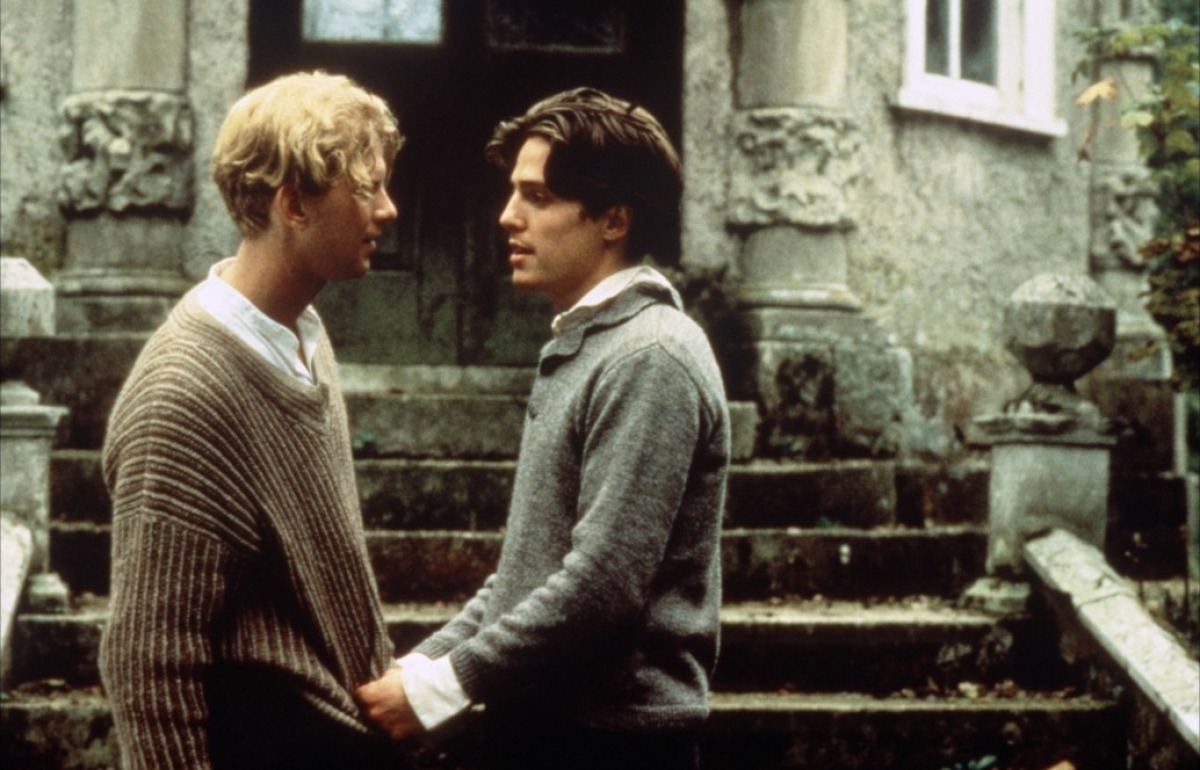
Since its release in 1971, Maurice has been widely read and praised. It has been, and continues to be, adapted for major stage productions, including the 1987 Oscar-nominated film adaptation starring Hugh Grant and James Wilby.
My Thoughts
Maurice had been on my TBR for so long that I don’t even recall how it originally came to my attention. I must have been in college studying arts and literature, that time in life when your world is suddenly unlocked to show all the books and knowledge there is to soak up, far too much for one lifetime. But I couldn’t find Maurice anywhere in Canada; it always seemed to be out of stock when I went to buy it, and every time I found it available at a library, it wasn’t there.
It was only last winter, on a road trip over the United States border during a stop at a Barnes & Noble, did I find multiple copies of the 2005 edition of Maurice sitting on the shelf, completely available, not hard to find in the least. And I was only driven to read it when I received a free trial of a new streaming service and found the 1987 film adaptation did I think I’m going to drop everything and read the book now so I can see the movie before my trial expires.
I read it within a few days, easy to get through, a classic for a reason. The story does drag a bit at times, but it’s amazing that this was written at the time it was set, in the 1910s, but Forster knew that no publisher would touch a novel written about a man coming to terms with his homosexuality during that period. As a result, Maurice deals with the notion of homosexuality being a mental illness, something that can be cured. And yet, the story doesn’t dwell too long on the concept of queer suffering and ennui, because society won’t recognize or accept them. I wouldn’t exactly say it has a happy ending given the time period in which it takes place, but it’s still worth the read, especially for fans of Oscar Wilde’s The Picture of Dorian Gray.
As much as Pride Month is a celebration, it’s also a protest, and we owe it to our queer forefathers to look back on the sometimes ugly history of society’s mistreatment of the queer community. Which is why books like Maurice are all the more important during June.
“It was all so plain now. He had lied. He phrased it ‘been fed lies upon lies,’ but lies are the natural food of boyhood, and he had eaten greedily.”
If we aren’t already, let’s be friends on Goodreads!
When you shop through affiliate links on this page, I may earn a commission.



 Jeffrey Reads