
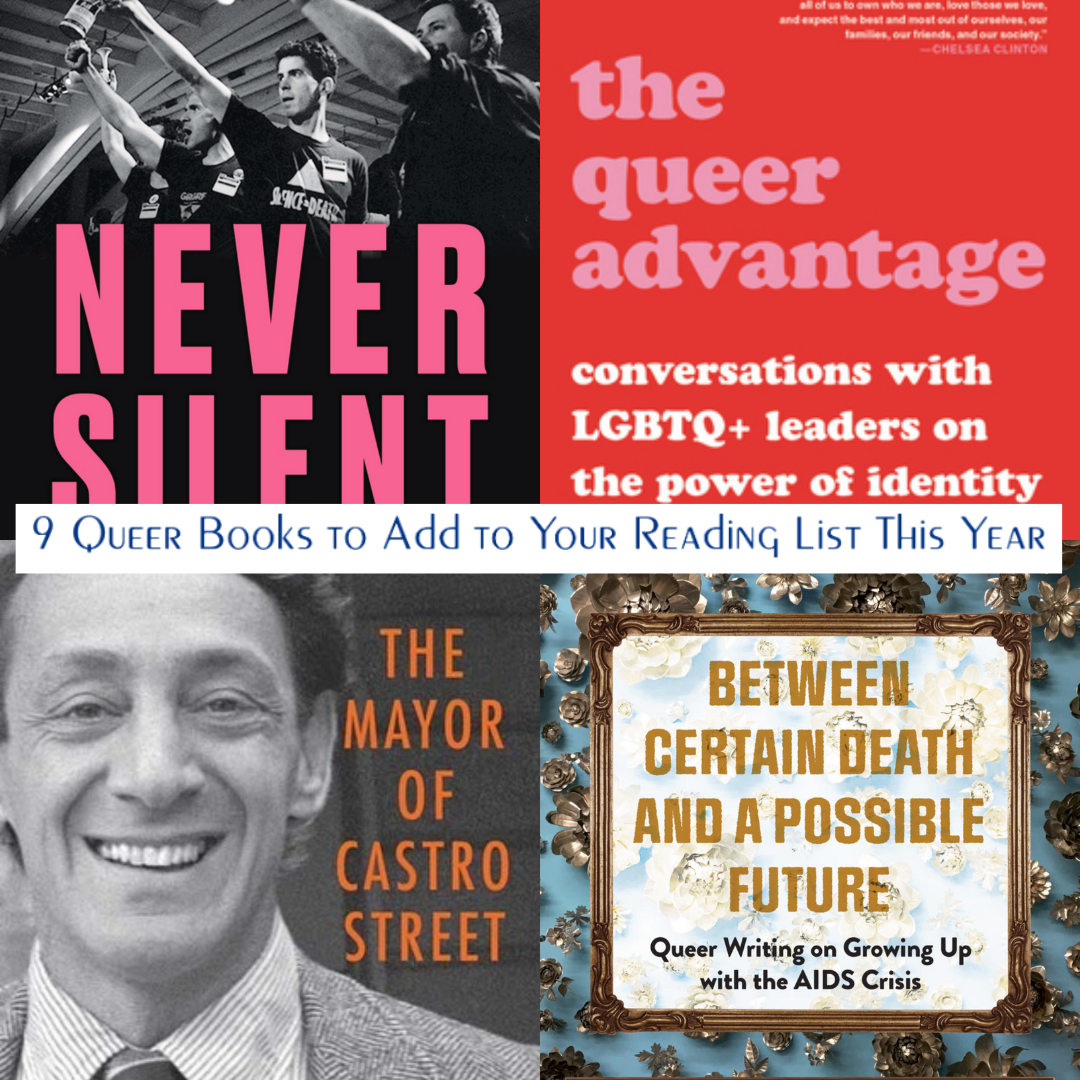
This year more than ever, it’s important to remember that Pride is a protest. Anti-trans laws and rhetoric continue to take hold across the United States, which not only devastates the trans community but the LGBTQ+ community as a whole. As newer generations continue to know more freedom as queer people, it’s especially vital that we continue to look back on the narratives from decades past when the queer landscape looked quite different. As a result, the book recommendations I’ve assembled here emphasize the urgency of queerness, its history, and to make sure unfortunate histories don’t repeat themselves.
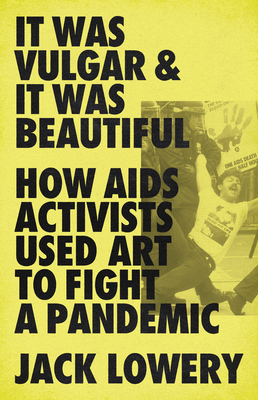
It Was Vulgar and It Was Beautiful: How AIDS Activists Used Art to Fight a Pandemic by Jack Lowery
In the late 1980s, the AIDS pandemic was annihilating queer people, intravenous drug users, and communities of color in America, and disinformation about the disease ran rampant. Out of the activist group ACT UP (AIDS Coalition to Unleash Power), an art collective that called itself Gran Fury formed to campaign against corporate greed, government inaction, stigma, and public indifference to the epidemic. Jack Lowery examines Gran Fury’s art and activism from iconic images like the “Kissing Doesn’t Kill” poster to the act of dropping piles of fake bills onto the trading floor of the New York Stock Exchange. Lowery offers a complex, moving portrait of a collective and its members, who built essential solidarities with each other and whose lives evidenced the profound trauma of enduring the AIDS crisis. Gran Fury and ACT UP’s strategies are still used frequently by the activists leading contemporary movements. In an era when structural violence and the devastation of COVID-19 continue to target the most vulnerable, this belief in the power of public art and action persists.
Buy a copy here.

When You Call My Name by Tucker Shaw
Film fanatic Adam is seventeen and being asked out on his first date—and the guy is cute. Heart racing, Adam accepts, quickly falling in love with Callum like the movies always promised. Fashion-obsessed Ben is eighteen and has just left his home upstate after his mother discovers his hidden stash of gay magazines. When he comes to New York City, Ben’s sexuality begins to feel less like a secret and more like a badge of honor. Then Callum disappears, leaving Adam heartbroken, and Ben finds out his new world is more closed-minded than he thought.
When Adam finally tracks Callum down, he learns the guy he loves is very ill. And in a chance meeting near the hospital where Callum is being treated, Ben and Adam meet, forever changing each other’s lives. As both begin to open their eyes to the possibilities of queer love and life, they realize sometimes the only people who can help you are the people who can really see you—in all your messy glory. A love letter to New York and the liberating power of queer friendship, When You Call My Name is a hopeful novel about the pivotal moments of our youth that break our hearts and the people who help us put them back together.
Buy a copy here.
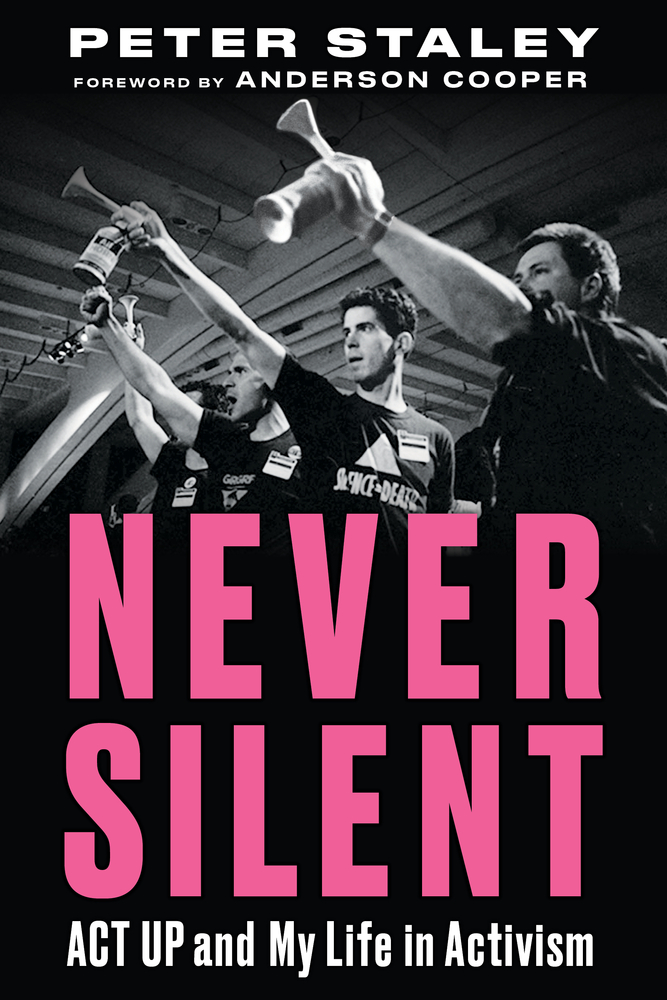
Never Silent: ACT UP and My Life in Activism by Peter Staley
In 1987, somebody shoved a flyer into the hand of Peter Staley: massive AIDS demonstration, it announced. After four years on Wall Street as a closeted gay man, Staley was familiar with the homophobia common on trading floors. He also knew that he was not beyond the reach of HIV, having recently been diagnosed with AIDS-Related Complex. A week after the protest, Staley found his way to a packed meeting of the AIDS Coalition To Unleash Power—ACT UP—in the West Village. It would prove to be the best decision he ever made. ACT UP would change the course of AIDS, pressuring the National Institutes of Health, the FDA, and three administrations to finally respond with research that ultimately saved millions of lives.
Staley, a shrewd strategist with nerves of steel, organized some of the group’s most spectacular actions, from shutting down trading on the floor of the New York Stock Exchange to putting a giant condom over the house of Senator Jesse Helms. Never Silent is the inside story of what brought Staley to ACT UP and the explosive and sometimes painful years to follow—years filled with triumph, humiliation, joy, loss, and persistence. Never Silent is guaranteed to inspire the activist within all of us.
Buy a copy here.
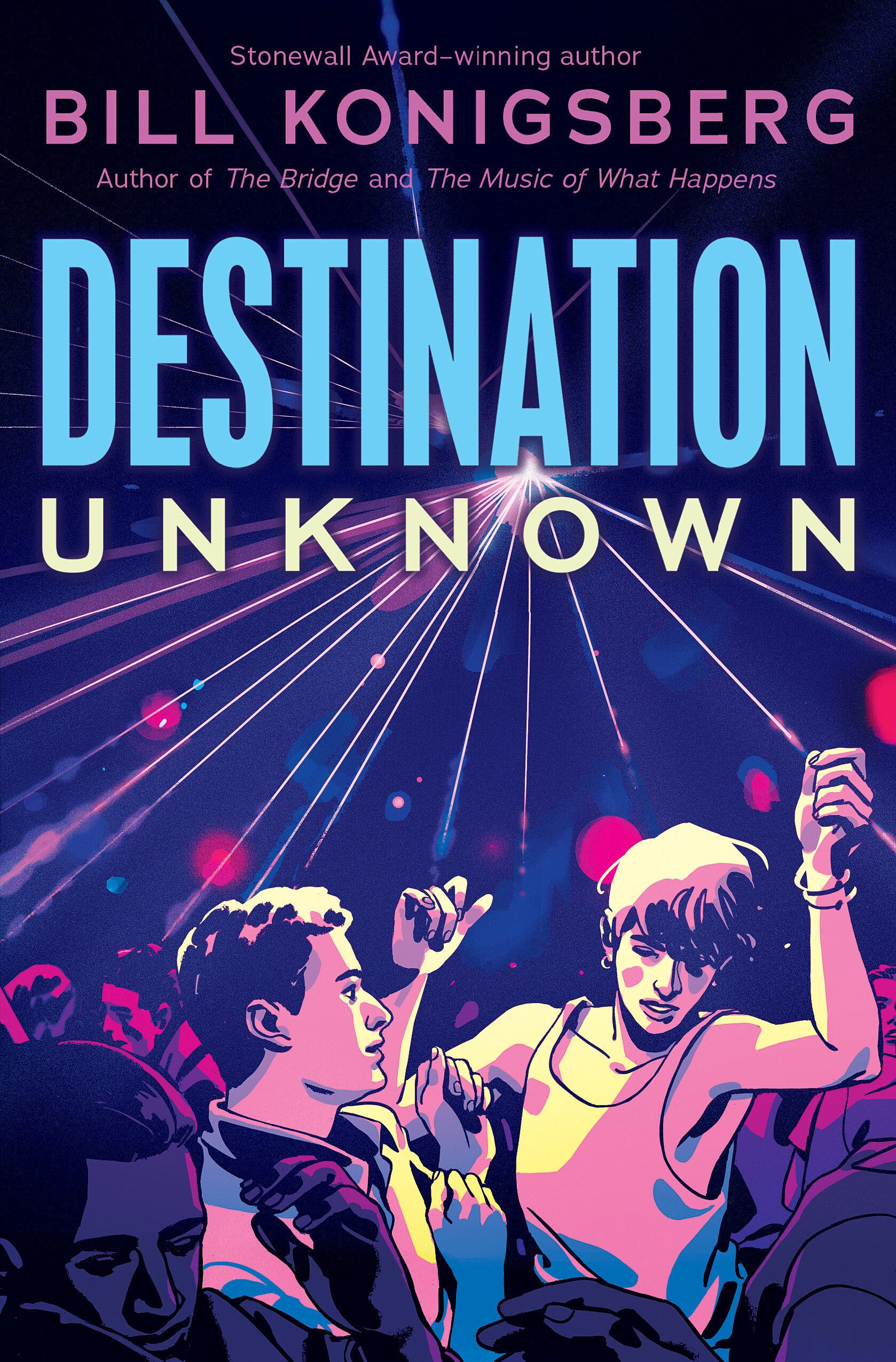
Destination Unknown by Bill Konigsberg
It’s 1987 in New York City, and Micah is at a dance club, trying to pretend he’s more out and outgoing than he really is. C.J. isn’t just out, he’s completely out there, and Micah can’t help but be both attracted to and afraid of someone who travels so loudly and proudly through the night. A connection occurs. Is it friendship? Romance? Is C.J. the one with all the answers… or does Micah bring more to the relationship that it first seems?
As their lives become more and more entangled in the AIDS epidemic that’s laying waste to their community, and the AIDS activism that will ultimately bring a strong voice to their demands, whatever Micah and C.J. have between them will be tested, strained, pushed, and pulled, but it will also be a lifeline in a time of death, a bond that will determine the course of their futures. In Destination Unknown, Bill Konigsberg returns to a time he knew well as a teenager to tell a story of identity, connection, community, and survival.
Buy a copy here.
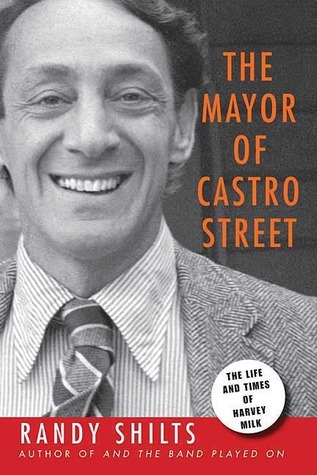
The Mayor of Castro Street: The Life and Times of Harvey Milk by Randy Shilts
The Mayor of Castro Street is Randy Shilts’s acclaimed story of Harvey Milk, the man whose personal life, public career, and tragic assassination mirrored the dramatic and unprecedented emergence of the gay community in America during the 1970s. Known as “The Mayor of Castro Street” even before he was elected to the San Francisco Board of Supervisors, Harvey Milk’s personal and political life is a story full of personal tragedies and political intrigues, assassinations at City Hall, massive riots in the streets, the miscarriage of justice, and the consolidation of gay power and gay hope. The Mayor of Castro Street is a story of personal tragedies and political intrigues, assassination in City Hall and massive riots in the streets, the miscarriage of justice and the consolidation of gay power and gay hope.
Buy a copy here.

Gay Like Me: A Father Writes to His Son by Richie Jackson
When Jackson’s 18-year-old son born through surrogacy came out to him, the successful producer, now in his 50s, was compelled to reflect on his experiences and share his wisdom on life for LGBTQ Americans over the past half-century. Gay Like Me is a celebration of gay identity and parenting, and a powerful warning for his son, other gay men and the world. Jackson looks back at his own journey as a gay man coming of age through decades of political and cultural turmoil. Jackson’s son lives in a seemingly more liberated America, and Jackson beautifully lays out how far we’ve come since Stonewall: the increased visibility of gay people in society, the legal right to marry, and the existence of a drug to prevent HIV. But bigotry is on the rise, ignited by a president who has declared war on the gay community and fanned the flames of homophobia.
A newly constituted Supreme Court with a conservative tilt is poised to overturn equality laws and set the clock back decades. Being gay is a gift, Jackson writes, but with their gains in jeopardy the gay community must not be complacent. Gay Like Me is a blueprint for our time that bridges the knowledge gap of what it’s like to be gay in America. This is a cultural manifesto that will stand the test of time. Angry, proud, fierce, tender, it is a powerful letter of love from a father to a son that holds lasting insight for us all.
Buy a copy here.
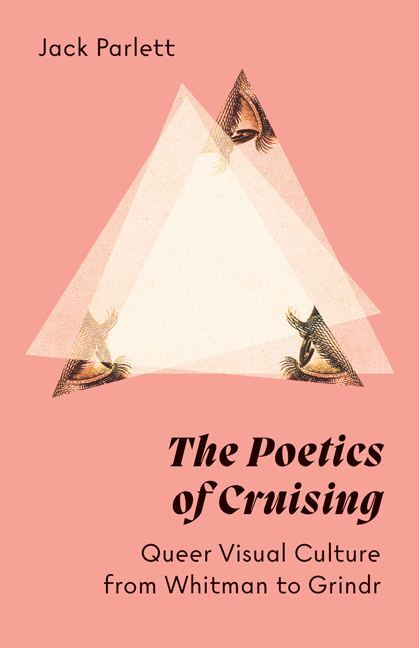
The Poetics of Cruising: Queer Visual Culture from Walt Whitman to Grindr by Jack Parlett
A groundbreaking new history of urban cruising through the lenses of urban poets. The Poetics of Cruising explores the relationship between cruising, photography, and the visual in the work of leading poets, from Walt Whitman in the nineteenth century to Eileen Myles in the twenty-first. What is it that happens, asks Jack Parlett, and what is it that is sought, in this often transient moment of perception we call cruising, this perceptual arena where acts of looking between strangers are intensified and eroticized? Parlett believes that this moment is not only optical in nature but visual: a mode of looking that warrants comparison with the ways in which we behold still and moving images. Whether it’s Whitman’s fixation with daguerreotypes, Langston Hughes’s hybrid photographic works, or Frank O’Hara’s love of Hollywood movie stars, argues Parlett, the history of poets cruising abounds with this intermingling between the verbal and the visual, the passing and the fixed.
To look at someone in the act of cruising, this history suggests, is to capture, consider, and aestheticize, amid the flux and instantaneity of urban time. But it is also to reveal the ambivalence at the heart of this erotic search, where power may be unevenly distributed across glances, and gendered and racialized bodies are marked. Thus, in identifying for the first time this confluence of cruising, poetry, and visual culture, Parlett concludes that the visual erotic economy associated with gay cruising today, exemplified by the photographic grid of an app like Grindr, is not a uniquely contemporary phenomenon. Innovative, astute, and highly readable, and drawing on compelling archival material, The Poetics of Cruising is a must-read for scholars of queer and LGBTQ literature and culture, modern and contemporary poetry, visual studies, and the history of sexuality.
Buy a copy here.
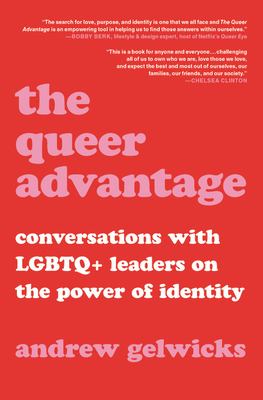
The Queer Advantage: Conversations with LGBTQ+ Leaders on the Power of Identity by Andrew Gelwicks
Meet the LGBTQ+ dealmakers, trailblazers, and glass-ceiling breakers in business, politics, and beyond. The people who are creating national public policy, running billion-dollar tech enterprises, and winning Olympic medals. Andrew Gelwicks interviews the leaders who have forged their own paths and changed the world. From Troye Sivan to Margaret Cho, George Takei to Billie Jean King, Shangela to Adam Rippon, each person credits their queer identity with giving them an edge in their paths to success. Their stories brim with the hard-won lessons gained over their careers. With variances in age, background, careers, and races, key themes shine. Collecting incisive, deeply personal conversations with LGBTQ+ trailblazers about how they leveraged the challenges and insights they had as relative outsiders to succeed in the worlds of business, tech, politics, Hollywood, sports and beyond, The Queer Advantage celebrates the unique, supercharged power of queerness.
Buy a copy here.
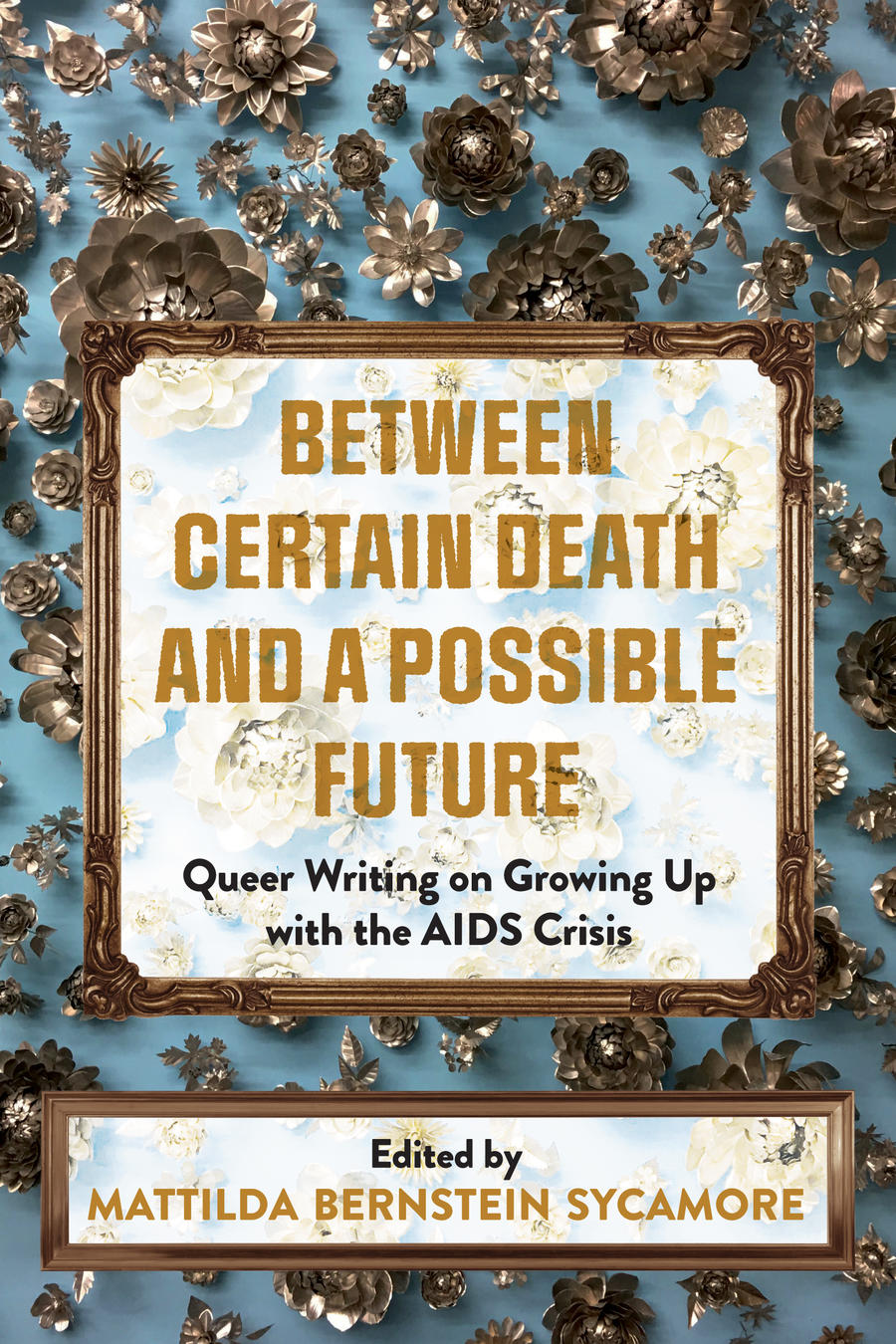
Between Certain Death and a Possible Future: Queer Writing on Growing Up with the AIDS Crisis edited by Mattilda Bernstein Sycamore
An enthralling and incisive anthology of personal essays on the persistent impact of the AIDS crisis on queer lives. Every queer person lives with the trauma of AIDS, and this plays out intergenerationally. Usually we hear about two generations: the first, coming of age in the era of gay liberation, and then watching entire circles of friends die of a mysterious illness as the government did nothing to intervene. And now we hear about younger people growing up with effective treatment and prevention available, unable to comprehend the magnitude of the loss. But there is another generation between these two, one that came of age in the midst of the epidemic with the belief that desire intrinsically led to death, and internalized this trauma as part of becoming queer.
Between Certain Death and a Possible Future: Queer Writing on Growing up with the AIDS Crisis offers crucial stories from this missing generation in AIDS literature and cultural politics. This wide-ranging collection includes 36 personal essays on the ongoing and persistent impact of the HIV/AIDS crisis in queer lives. Here you will find an expansive range of perspectives on a specific generational story, essays that explore and explode conventional wisdom, while also providing a necessary bridge between experiences. These essays respond, with eloquence and incisiveness, to the question: How do we reckon with the trauma that continues to this day, and imagine a way out?
Buy a copy here.
If we aren’t already, let’s be friends on Goodreads!
When you shop through affiliate links on this page, I may earn a commission.
You might also like:


 Jeffrey Reads