

For as long as books have existed, book censorship has come along with it. Because, in the words of Bree Van de Kamp, “Anything that good has got to be sinful.” It thus comes as no surprise that most novels in the popular fiction genre have been banned or challenged throughout history.
Since we’ve been living through an age of increased book censorship in the United States over the last several years, it’s good to take stock of just how many books we’ve read throughout our lives that have been banned or challenged.
As Stephen King famously put it, “Don’t get mad, get even. Don’t spend time waving signs or carrying petitions around the neighborhood. Instead, run, don’t walk, to the nearest nonschool library or to the local bookstore and get whatever it was that they banned. Read whatever they’re trying to keep out of your eyes and your brain, because that’s exactly what you need to know.” Scroll on for some banned books that I’ve read.

Bridge to Terabithia by Katherine Paterson
Synopsis: Jess Aarons has been practicing all summer so he can be the fastest runner in the fifth grade. And he almost is, until the new girl in school, Leslie Burke, outpaces him. The two become fast friends and spend most days in the woods behind Leslie’s house, where they invent an enchanted land called Terabithia. One morning, Leslie goes to Terabithia without Jess and a tragedy occurs. It will take the love of his family and the strength that Leslie has given him for Jess to be able to deal with his grief.
Why it was banned: “language and subject matter that set bad examples and give students negative views of life,” “profanity and references to witchcraft,” and “disrespect for adults, and an elaborate fantasy world that might lead to confusion.”
Buy a copy here.
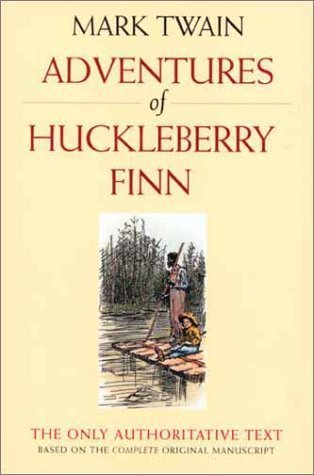
The Adventures of Huckleberry Finn by Mark Twain
Synopsis: A scathing satire on entrenched attitudes, Twain’s The Adventures of Huckleberry Finn defines the American Dream of young heroes. Sometimes ironic, sometimes mocking, sometimes boyish and exuberant, it is named among the Great American Novels. Huck is back. Taken for a son by Widow Douglas; struggling against the society and its attempts to “civilize” him. Escaping his alcoholic father by faking his death, we join him as he voyages down the Mississippi River seeking liberation. Finding his way to Jackson’s island he meets Jim, Mrs. Watson’s runaway slave. What happens as they team up, capture a raft, and encounter a seemingly haphazard array of people and situations? Immersed in deadly violence, finding tranquility only on the river with Jim, will Huckleberry Finn find the freedom and independence he is seeking?
Why it was banned: “racial language and dialect,” “creates an emotional block for black students that inhibits learning,” “damages self-esteem of black youth,” for being “degrading, insensitive, and oppressive” and “trash and suitable only for the slums.”
Buy a copy here.
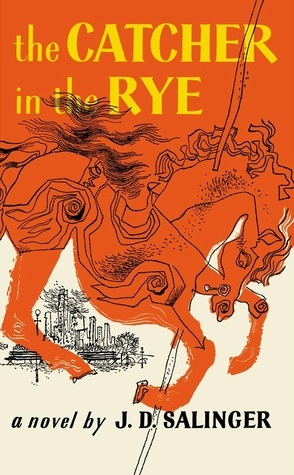
The Catcher in the Rye by J.D. Salinger
Synopsis: It’s Christmastime and Holden Caulfield has just been expelled from yet another school. Fleeing the crooks at Pencey Prep, he pinballs around New York City seeking solace in fleeting encounters—shooting the bull with strangers in dive hotels, wandering alone round Central Park, getting beaten up by pimps and cut down by erstwhile girlfriends. The city is beautiful and terrible, in all its neon loneliness and seedy glamour, its mingled sense of possibility and emptiness. Holden passes through it like a ghost, thinking always of his kid sister Phoebe, the only person who really understands him, and his determination to escape the phonies and find a life of true meaning.
Why it was banned: “obscene language and content,” “excess vulgar language, sexual scenes, things concerning moral issues, excessive violence, and anything dealing with the occult,” “profanity and sexual references,” for being “blasphemous and undermining morality,” “promotion of anti-family values,” “depiction of premarital sex, alcohol abuse, and prostitution,” “defamatory statements to minorities, God, women, and the disabled,” and for being a “filthy, filthy book.”
Buy a copy here.

Of Mice and Men by John Steinbeck
Synopsis: They are an unlikely pair: George is “small and quick and dark of face”; Lennie, a man of tremendous size, has the mind of a young child. Yet they have formed a “family,” clinging together in the face of loneliness and alienation. Laborers in California’s dusty vegetable fields, they hustle work when they can, living a hand-to-mouth existence. But George and Lennie have a plan: to own an acre of land and a shack they can call their own. A unique perspective on life’s hardships, this story has achieved the status of timeless classic due to its remarkable success as a novel, a Broadway play, and three acclaimed films.
Why it was banned: for being “vulgar and blasphemous,” “profanity and using God’s name in vain,” because “Steinbeck is known to have an anti-business attitude as well as being very questionable about his patriotism,” “racial slurs,” “sexual overtones,” for having “morbid and depressing themes,” “lurid passages about sex, statements defamatory to minorities, God, women, and the disabled,” “profane language, moral statement, treatment of the retarded, and the violent ending,” and “does not represent traditional values.”
Buy a copy here.

Peyton Place by Grace Metalious
Synopsis: First published in 1956, Peyton Place uncovers the passions, lies and cruelties that simmer beneath the surface of a postcard-perfect town. At the center of the novel are three women, each with a secret to hide: Constance MacKenzie, the original desperate housewife; her daughter Allison, whose dreams are stifled by small-town small-mindedness; and Selena Cross, her gypsy-eyed friend from the wrong side of the tracks.
Why it was banned: “obscene” language and content, legally banned from being imported into the country by the government of Canada from 1956 to 1958; the Deputy Minister of National Revenue declared it “shocking, coarse, and vulgar.”
Buy a copy here.

The Bluest Eye by Toni Morrison
Synopsis: The Bluest Eye is Toni Morrison’s first novel, a book heralded for its richness of language and boldness of vision. Set in the author’s girlhood hometown of Lorain, Ohio, it tells the story of black, eleven-year-old Pecola Breedlove. Pecola prays for her eyes to turn blue so that she will be as beautiful and beloved as all the blond, blue-eyed children in America. In the autumn of 1941, the year the marigolds in the Breedloves’ garden did not bloom. Pecola’s life does change—in painful, devastating ways. With its vivid evocation of the fear and loneliness at the heart of a child’s yearning, and the tragedy of its fulfillment, The Bluest Eye remains one of Toni Morrisons’s most powerful, unforgettable novels, and a significant work of American fiction.
Why it was banned: “graphic descriptions and language,” for being “pornographic,” “sexual content,” “explicit sex, including the rape of an eleven-year-old girl by her father,” for having “an underlying socialist-communist agenda,” and for being “a bad book.”
Buy a copy here.
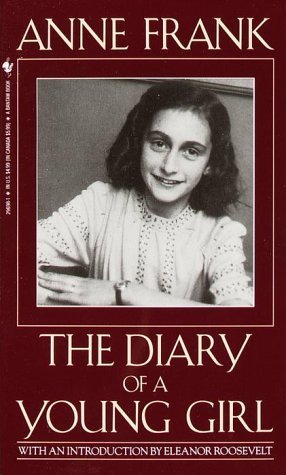
The Diary of a Young Girl by Anne Frank
Synopsis: Discovered in the attic in which she spent the last years of her life, Anne Frank’s remarkable diary has become a world classic—a powerful reminder of the horrors of war and an eloquent testament to the human spirit. In 1942, with the Nazis occupying Holland, a thirteen-year-old Jewish girl and her family fled their home in Amsterdam and went into hiding. For the next two years, until their whereabouts were betrayed to the Gestapo, the Franks and another family lived cloistered in the “Secret Annexe” of an old office building. Cut off from the outside world, they faced hunger, boredom, the constant cruelties of living in confined quarters, and the ever-present threat of discovery and death. In her diary Anne Frank recorded vivid impressions of her experiences during this period. By turns thoughtful, moving, and surprisingly humorous, her account offers a fascinating commentary on human courage and frailty and a compelling self-portrait of a sensitive and spirited young woman whose promise was tragically cut short.
Why it was banned: “sexually offensive passages,” for being “a real downer,” for being “pornographic,” “sexual material and homosexual themes,” and for “anatomical descriptions.”
Buy a copy here.
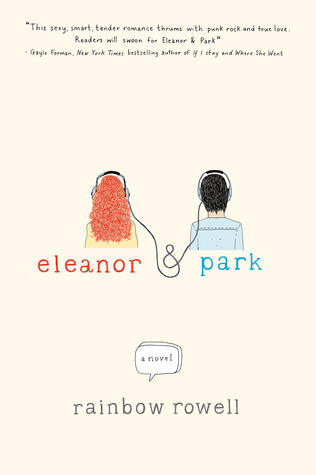
Eleanor & Park by Rainbow Rowell
Synopsis: Set over one school year in 1986, Eleanor & Park is the story of two star-crossed misfits – smart enough to know first love almost never lasts, but brave and desperate enough to try.
Why it was banned: “vile profanity,” for being “pornographic,” and “sexual language.” Asian American readers have also objected to passages considered racist as they were written by a white author.
Buy a copy here.
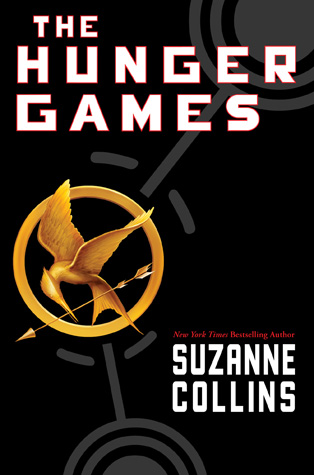
The Hunger Games by Suzanne Collins
Synopsis: Could you survive on your own in the wild, with every one out to make sure you don’t live to see the morning? In the ruins of a place once known as North America lies the nation of Panem, a shining Capitol surrounded by twelve outlying districts. The Capitol is harsh and cruel and keeps the districts in line by forcing them all to send one boy and one girl between the ages of twelve and eighteen to participate in the annual Hunger Games, a fight to the death on live TV. 16-year-old Katniss Everdeen, who lives alone with her mother and younger sister, regards it as a death sentence when she steps forward to take her sister’s place in the Games. But Katniss has been close to dead before—and survival, for her, is second nature. Without really meaning to, she becomes a contender. But if she is to win, she will have to start making choices that weigh survival against humanity and life against love.
Why it was banned: for giving children nightmares and for the possibility of “numbing other students to violence,” for “insensitivity, offensive language, violence, anti-family, anti-ethic, and occult/satanic,” and for “inserting religious views.”
Buy a copy here.

A Wrinkle in Time by Madeleine L’Engle
Synopsis: It was a dark and stormy night. Out of this wild night, a strange visitor comes to the Murry house and beckons Meg, her brother Charles Wallace, and their friend Calvin O’Keefe on a most dangerous and extraordinary adventure—one that will threaten their lives and our universe.
Why it was banned: for promoting “witchcraft, crystal balls, and demons,” for “sending mixed signals about good and evil,” and for “undermining religious beliefs.” One parent in Alabama in 1990 also complained that the novel listed Jesus Christ among other artists and thinkers, rather than as a religious figure.
Buy a copy here.

The Witches by Roald Dahl
Synopsis: This is not a fairy-tale. This is about real witches. Real witches don’t ride around on broomsticks. They don’t even wear black cloaks and hats. They are vile, cunning, detestable creatures who disguise themselves as nice, ordinary ladies. So how can you tell when you’re face to face with one? Well, if you don’t know yet you’d better find out quickly-because there’s nothing a witch loathes quite as much as children and she’ll wield all kinds of terrifying powers to get rid of them.
Why it was banned: “perceived misogyny,” since Dahl says that witches can only be women, because “the children misbehave and take retribution on the adults and there’s never, ever a consequence for their actions,” for “devaluing the life of a child,” “too sophisticated and did not teach moral values,” for “violence, mouse turning, and the word slut,” for the “possibility of turning kids to witchcraft or the occult,” “fear of desensitizing kids to violence,” for “depiction of witches as ordinary women that children cannot defend against and promoting Wiccan and witchcraft,” for being “satanic,” for “crude language and encouraging children to be disobedient,” and for being “derogatory to children, hurtful to self-esteem, and conflicted with the the [challenger’s] family’s religious and moral beliefs.”
Buy a copy here.
If we aren’t already, let’s be friends on Goodreads!
When you shop through affiliate links on this page, I may earn a commission.
How many banned books have you read?


 Jeffrey Reads
Leave a comment