

This year went in many different directions for me reading-wise. I found myself reading more fiction than I have in quite a while, less of the usual nonfiction I typically reach for, and experimenting more with genres of which I don’t read enough, like graphic novels and poetry. (I also published a poetry collection of my own!) One thing about my reading patterns can always be relied on, which is I’m always to going be keeping a mental tally of the best books I read each year. 2024’s was the most difficult to assemble in quite a few years, so I’m looking forward to taking a breather until 2025. (Just kidding, I’m always reading in one way or another.) Behold my list of picks for the 10 best books of the year.
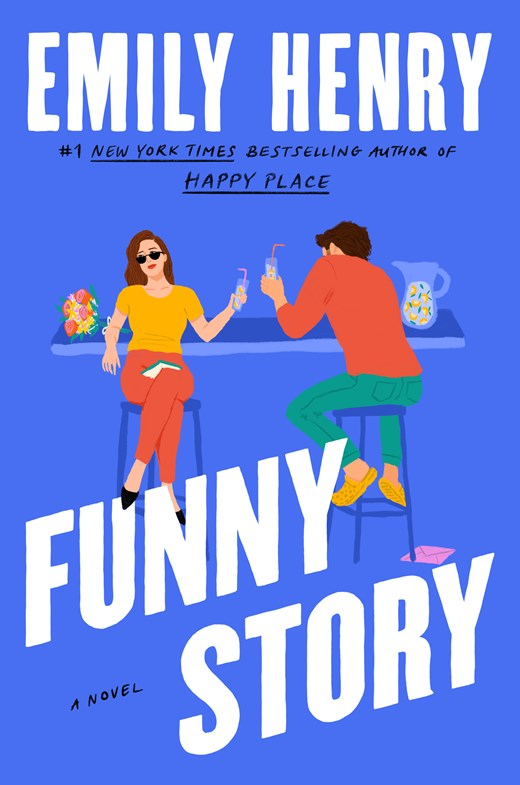
Funny Story by Emily Henry
Daphne always loved the way her fiancé Peter told their story. How they met (on a blustery day), fell in love (over an errant hat), and moved back to his lakeside hometown to begin their life together. He really was good at telling it… right up until the moment he realized he was actually in love with his childhood best friend, Petra. Which is how Daphne begins her new story: stranded in beautiful Waning Bay, Michigan, without friends or family but with a dream job as a children’s librarian (that barely pays the bills), and proposing to be roommates with the only person who could possibly understand her predicament: Petra’s ex, Miles Nowak.
Miles is exactly the opposite of practical, buttoned-up Daphne, whose coworkers know so little about her they have a running bet that she’s either FBI or in witness protection. The roommates mainly avoid one another, until one day, while drowning their sorrows, they form a tenuous friendship and a plan. If said plan also involves posting deliberately misleading photos of their summer adventures together, well, who could blame them? But it’s all just for show, of course, because there’s no way Daphne would actually start her new chapter by falling in love with her ex-fiancé’s new fiancée’s ex… right?
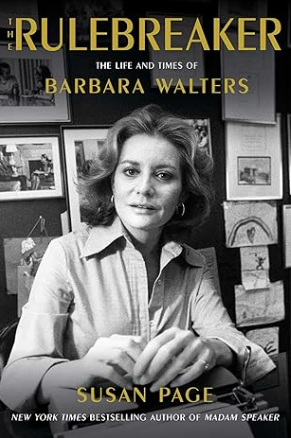
The Rulebreaker: The Life and Times of Barbara Walters by Susan Page
Barbara Walters was a force from the time TV was exploding on the American scene in the 1960s to its waning dominance in a new world of competition from streaming services and social media half a century later. She was not just a groundbreaker for women (Oprah announced when she was seventeen that she wanted to be Barbara Walters), but also expanded the big TV interview and then dominated the genre. By the end of her career, she had interviewed more of the famous and infamous, from presidents to movie stars to criminals to despots, than any other journalist in history.
Then at sixty-seven, past the age many female broadcasters found themselves involuntarily retired, she pioneered a new form of talk TV called The View. She is on the short list of those who have left the biggest imprints on television news and on our culture, male or female. So, who was the woman behind the legacy? In The Rulebreaker, Susan Page conducts 150 interviews and extensive archival research to discover that Walters was driven to keep herself and her family afloat after her mercurial and famous impresario father attempted suicide. But she never lost the fear of an impending catastrophe, which is what led her to ask for things no woman had ever asked for before, to ignore the rules of misogynistic culture, to outcompete her most ferocious competitors, and to protect her complicated marriages and love life from scrutiny.
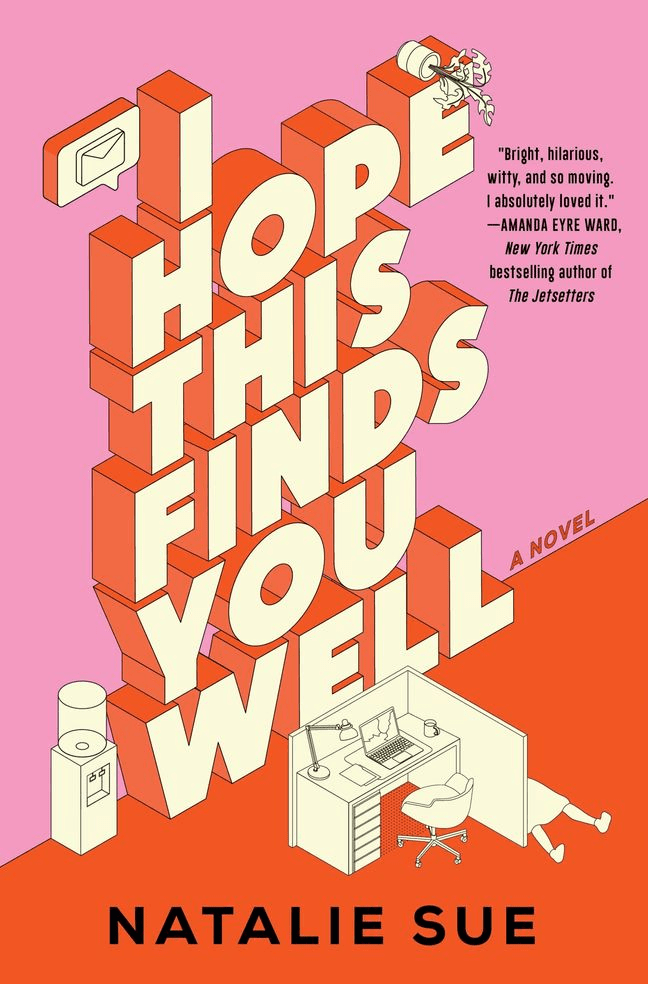
I Hope This Finds You Well by Natalie Sue
As far as Jolene is concerned, her interactions with her colleagues should start and end with her official duties as an admin for Supershops, Inc. Unfortunately, her irritating, incompetent coworkers don’t seem to understand the importance of boundaries. Her secret to survival? She vents her grievances in petty email postscripts, then changes the text colour to white so no one can see. That is, until one of her secret messages is exposed. Her punishment: sensitivity training (led by the suspiciously friendly HR guy, Cliff) and rigorous email restrictions.
When an IT mix-up grants her access to her entire department’s private emails and DMs, Jolene knows she should report it, but who could resist reading what their coworkers are really saying? And when she discovers layoffs are coming, she realizes this might just be the key to saving her job. The plan is simple: gain her boss’s favour, convince HR she’s Supershops material and beat out the competition. But as Jolene is drawn further into her coworker’s private worlds and secrets, her carefully constructed walls begin to crumble — especially around Cliff, who she definitely cannot have feelings for. Soon she will need to decide if she’s ready to leave the comfort of her cubicle, even if it means coming clean to her colleagues.
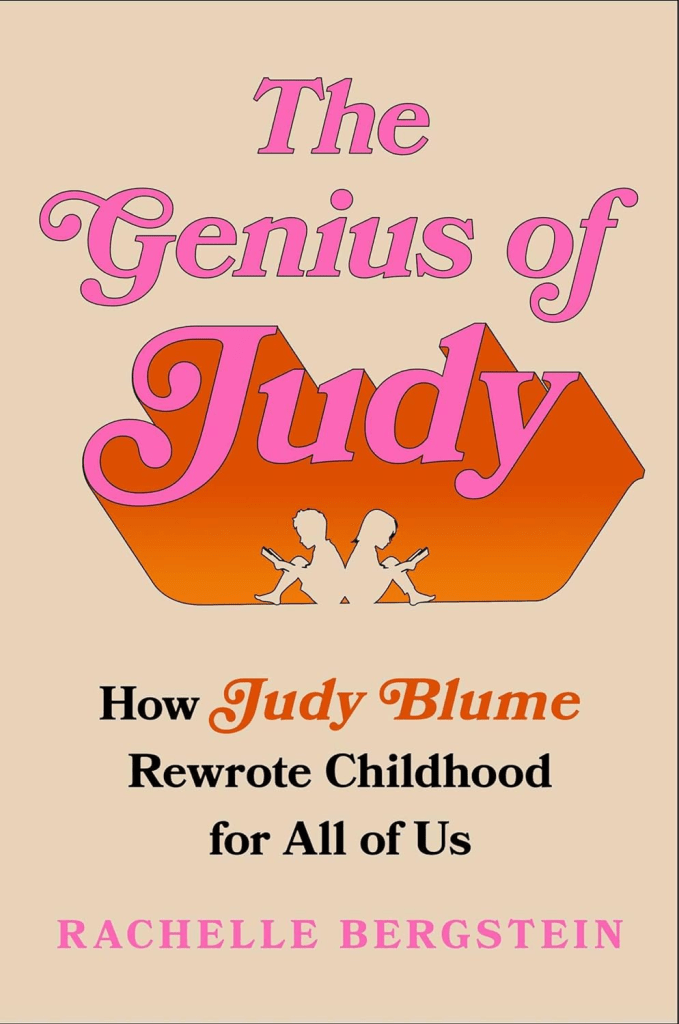
The Genius of Judy: How Judy Blume Rewrote Childhood for All of Us by Rachelle Bergstein
Everyone knows Judy Blume. Her books have garnered her fans of all ages for decades and sold tens of millions of copies. But why were people so drawn to them? And why are we still talking about them now in the 21st century? In The Genius of Judy, her remarkable story is revealed as never before, beginning with her as a mother of two searching for purpose outside of her home in 1960s suburban New Jersey. The books she wrote starred regular children with genuine thoughts and problems. But behind those deceptively simple tales, Blume explored the pillars of the growing women’s rights movement, in which girls and women were entitled to careers, bodily autonomy, fulfilling relationships, and even sexual pleasure. Blume wasn’t trying to be a revolutionary — she just wanted to tell honest stories — but in doing so, she created a cohesive, culture-altering vision of modern adolescence.
Blume’s bravery provoked backlash, making her most-banned author in the United States in the mid-1980s. Thankfully, her works withstood those culture wars and it’s no coincidence that Blume has resurfaced as a cultural touchstone now. Young girls are still cat-called, sex education curricula are getting dismissed as pornography, and entire shelves of libraries are being banned. As we face these challenges, it’s only natural we look to Blume, the grand dame of so-called dirty books. This is the story of how a housewife became a groundbreaking artist, and how generations of empowered fans are her legacy, today more than ever.

Men Have Called Her Crazy by Anna Marie Tendler
A powerful memoir that reckons with mental health as well as the insidious ways men impact the lives of women. In early 2021, popular artist Anna Marie Tendler checked herself into a psychiatric hospital following a year of crippling anxiety, depression, and self-harm. Over two weeks, she underwent myriad psychological tests, participated in numerous therapy sessions, connected with fellow patients and experienced profound breakthroughs, such as when a doctor noted, “There is a you inside that feels invisible to those looking at you from the outside.”
In Men Have Called Her Crazy, Tendler recounts her hospital experience as well as pivotal moments in her life that preceded and followed. As the title suggests, many of these moments are impacted by men: unrequited love in high school; the twenty-eight-year-old she lost her virginity to when she was sixteen; the frustrations and absurdities of dating in her mid-thirties; and her decision to freeze her eggs as all her friends were starting families. This stunning literary self-portrait examines the unreasonable expectations and pressures women face in the 21st century. Yet overwhelming and despairing as that can feel, Tendler ultimately offers a message hope. Early in her stay in the hospital, she says, “My wish for myself is that one day I’ll reach a place where I can face hardship without trying to destroy myself.” By the end of the book, she fulfills that wish.
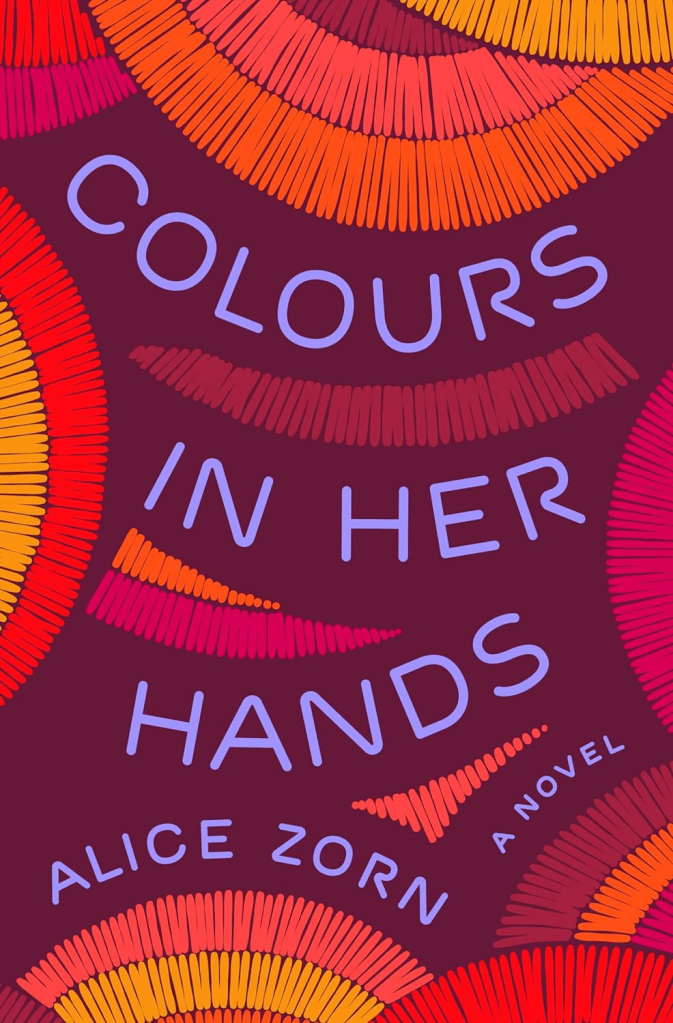
Colours in Her Hands by Alice Zorn
What is intellectual disability? Ask Bruno, who is at his wits’ end trying to predict what his sister, Mina, will do next. Ask Iris, who is entranced by the wildly inventive embroidery Mina creates. Ask Gabriela, who loves Mina and disagrees when Bruno uses Mina’s constant demands as an excuse not to have a child. Meet Mina in her overstuffed Montreal apartment, surrounded by her treasures. She knows she is the best paper sorter at the recycling plant where she works. She is proud to be diabetic but equally happy to cheat on her diet. The colours she stitches hum with life. Colours in Her Hands is a nuanced and thought-provoking novel about family, about art, about questioning the way the world treats those who are different. With an unforgettable voice, Mina navigates the labyrinth that society sets for her with dignity, inventiveness, and aplomb.
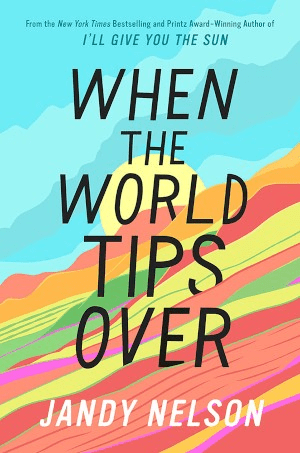
When the World Tips Over by Jandy Nelson
The Fall siblings live in hot Northern California wine country, where the sun pours out of the sky, and the devil winds blow so hard they whip the sense right out of your head. Years ago, the Fall kids’ father mysteriously disappeared, cracking the family into pieces. Now Dizzy Fall, age twelve, bakes cakes, sees spirits, and wishes she were a heroine of a romance novel. Miles Fall, seventeen, brainiac, athlete, and dog-whisperer, is a raving beauty, but also lost, and desperate to meet the kind of guy he dreams of. And Wynton Fall, nineteen, who raises the temperature of a room just by entering it, is a virtuoso violinist set on a crash course for fame, or self-destruction.
Then an enigmatic rainbow-haired girl shows up, tipping the Falls’ world over. She might be an angel. Or a saint. Or an ordinary girl. Somehow, she is vital to each of them. But before anyone can figure out who she is, catastrophe strikes, leaving the Falls more broken than ever. And more desperate to be whole. With road trips, rivalries, family curses, love stories within love stories within love stories, and sorrows and joys passed from generation to generation, this is the intricate, luminous tale of a family’s complicated past and present. And only in telling their stories can they hope to rewrite their futures.
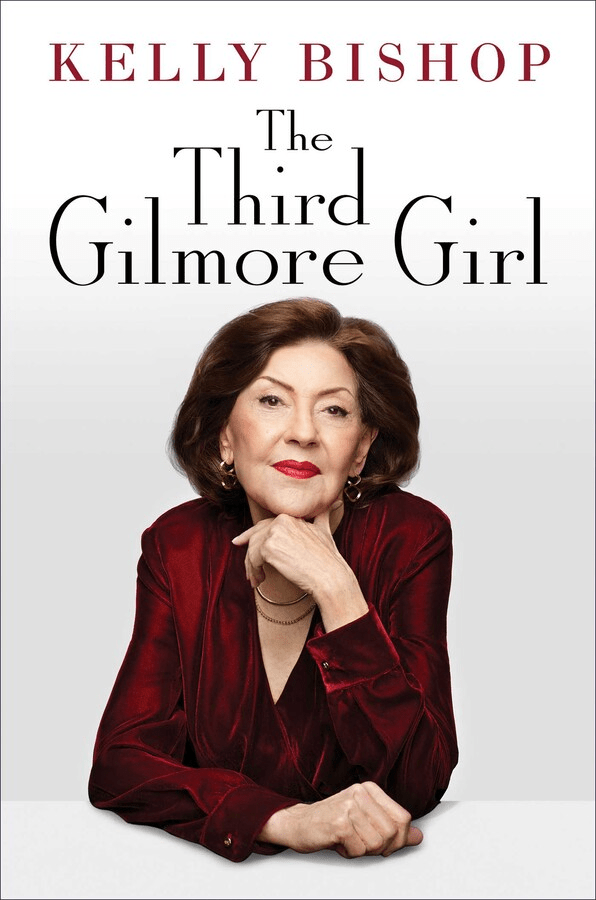
The Third Gilmore Girl by Kelly Bishop
Kelly Bishop’s long, storied career has been defined by landmark achievements, from winning a Tony Award for her turn in the original Broadway cast of A Chorus Line to her memorable performance as Jennifer Grey’s mother in Dirty Dancing. But it is probably her iconic role as matriarch Emily in the modern classic Gilmore Girls that cemented her legacy. Now, Bishop reflects on her remarkable life and looks towards the future with The Third Gilmore Girl.
She shares some of her greatest stories and the life lessons she’s learned on her journey. From her early transition from dance to drama, to marrying young to a compulsive gambler, to the losses and achievements she experienced — among them marching for women’s rights and losing her second husband to cancer — Bishop offers a rich, genuine celebration of her life. Full of witty insights, The Third Gilmore Girl is a warm, unapologetic, and spirited memoir from a woman who has left indelible impressions on her audiences for decades and has no plans on slowing down.
Thank you to Simon & Schuster Canada for the gifted copy!
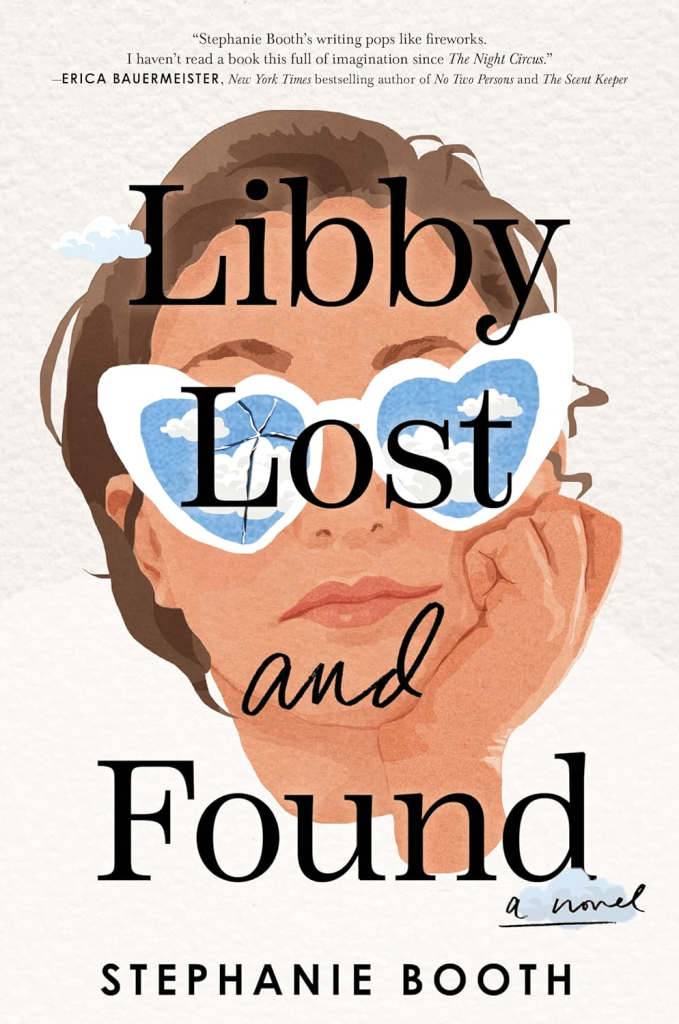
Libby Lost and Found by Stephanie Booth
Libby Lost and Found is a book for people who don’t know who they are without the books they love. It’s about the stories we tell ourselves and the chapters of our lives we regret. Most importantly, it’s about the endings we write for ourselves. Meet Libby Weeks, author of the mega-best-selling fantasy series, The Falling Children — written as “F.T. Goldhero” to maintain her privacy. When the last manuscript is already months overdue to her publisher and rabid fans around the world are growing impatient, Libby is diagnosed with early-onset Alzheimer’s.
Already suffering from crippling anxiety, Libby’s symptoms quickly accelerate. After she forgets her dog at the park one day — then almost discloses her identity to the journalist who finds him — Libby has to admit she needs help finishing the last book. Desperately, she turns to eleven-year-old superfan Peanut Bixton, who knows the books even better than she does but harbors her own dark secrets. Tensions mount as Libby’s dementia deepens —until both Peanut and Libby swirl into an inevitable but bone-shocking conclusion.
Thank you to Sourcebooks for the opportunity to read an early copy!

Eat the World by Marina Diamandis
Pop sensation Marina’s talent for powerful, evocative song lyrics finds a new outlet in her poetry. Each poem resonates with the same creative melodies and emotional depth that have made her an artistic sensation. Hailed by The New York Times for “redefining songs about coming of age, and the aftermath, with bluntness and crafty intelligence,” Marina delves even further into trauma, youth, and the highs and lows of relationships in these profound, autobiographical poems to form a collection that transcends the boundaries of music and literature.
Check out my picks for the best books of previous years here.


 Jeffrey Reads