
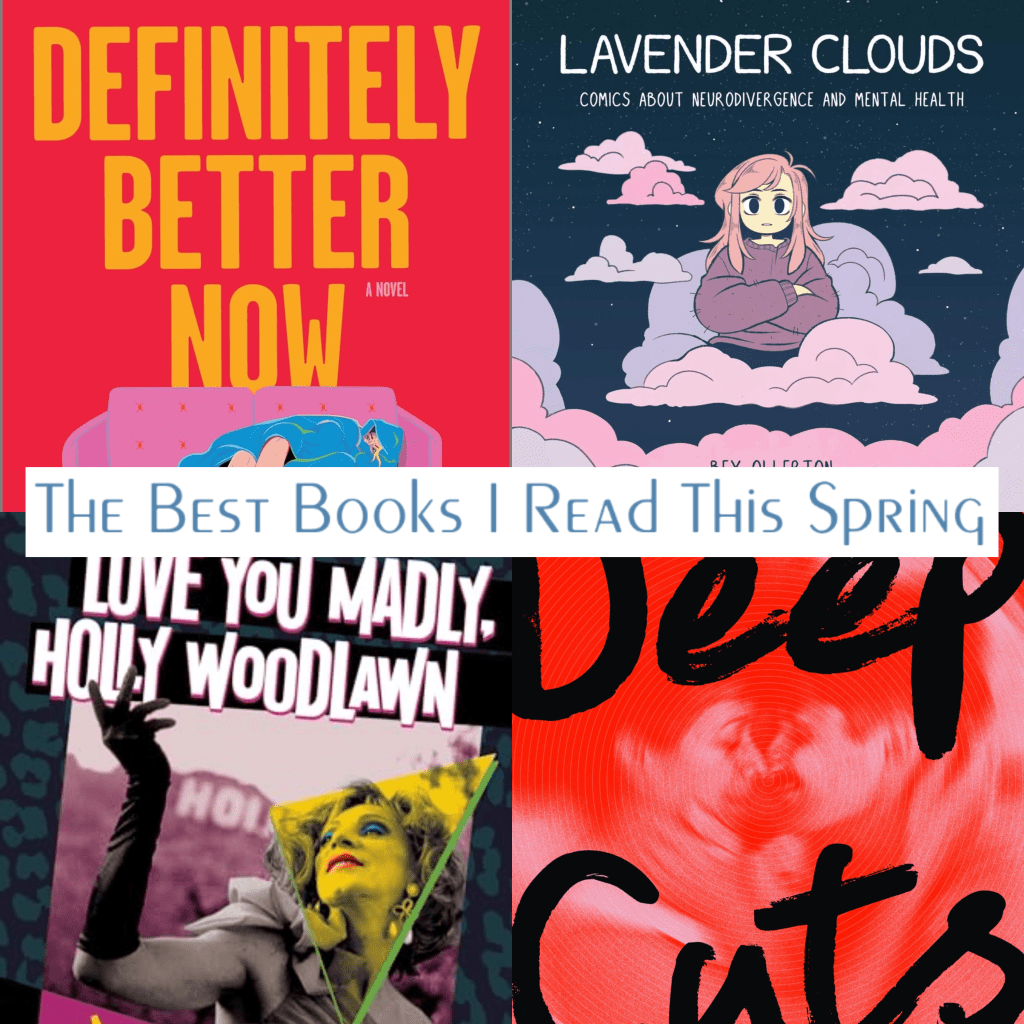
It’s just about that time of year where the lengthening of daylight each day reaches its peak, which means it’s about time for a new edition of The Best Books I Read This Season. I’m thrilled to report that my long-running reading slump from earlier this winter subsided, at least for a while, with some great reads that kept me humming for a few months afterward. I had a good run with some recent fiction titles as well as some great queer reads that you should add to your radar during Pride Month — or any month, because queer books matter during every month of the year. Without further ado, scroll on for the best books I read this spring.

I Want to Die But I Still Want to Eat Tteokbokki: Further Conversations with My Psychiatrist by Baek Sehee
When Baek Sehee started recording her sessions with her psychiatrist, her hope was to create a reference for herself. She never imagined she would reach so many people, especially young people, with her reflections. I Want to Die But I Want to Eat Tteokbokki became a runaway bestseller in South Korea, Indonesia, and the U.S., and reached a community of readers who appreciated depression and anxiety being discussed with such intimacy. Baek’s struggle with dysthymia continues in I Want to Die But I Still Want to Eat Tteokbokki. And healing is a difficult process; the inner conflict she experiences in treatment becomes more complex, more challenging. With this second book, Baek Sehee reaches out to hold the hands of all those for whom grappling with everyday despair is part of a lifelong project, part of the journey.
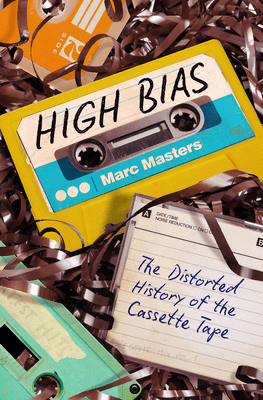
High Bias: The Distorted History of the Cassette Tape by Marc Masters
The cassette tape was revolutionary. Cheap, portable, and reusable, this small plastic rectangle changed music history. Make your own tapes! Trade them with friends! Tape over the ones you don’t like! The cassette tape upended pop culture, creating movements and uniting communities. High Bias charts the journey of the cassette from its invention in the early 1960s to its Walkman-led domination in the 1980s to decline at the birth of compact discs to resurgence among independent music makers.
Scorned by the record industry for “killing music,” the cassette tape rippled through scenes corporations couldn’t control. For so many, tapes meant freedom — to create, to invent, to connect. Marc Masters introduces readers to the tape artists who thrive underground; concert tapers who trade bootlegs; mixtape makers who send messages with cassettes; tape hunters who rescue forgotten sounds; and today’s labels, which reject streaming and sell music on cassette. Their stories celebrate the cassette tape as dangerous, vital, and radical.
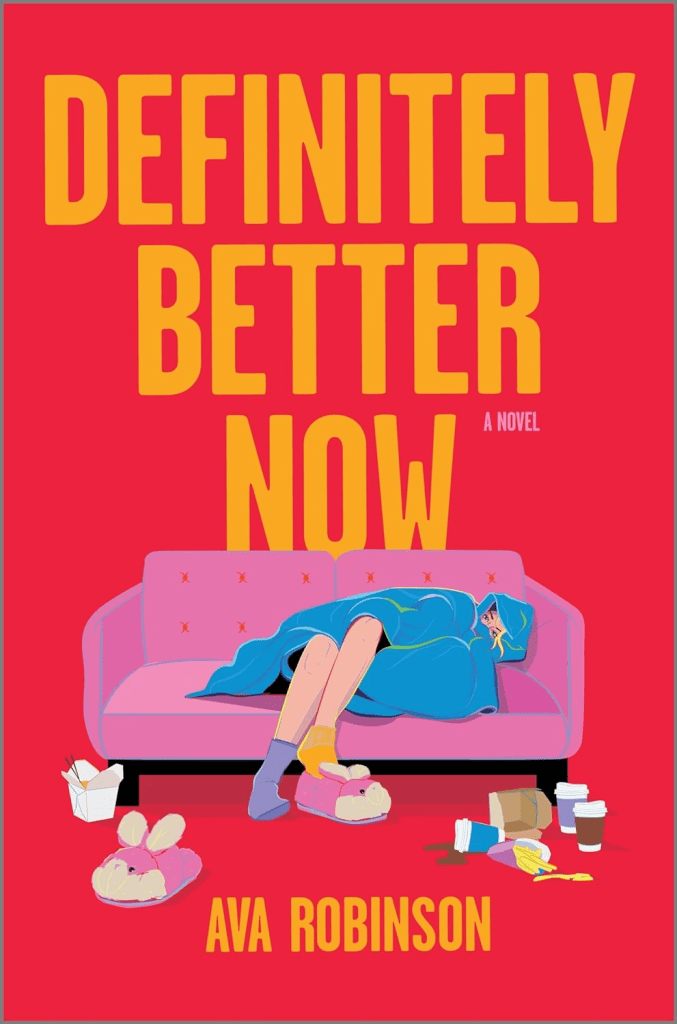
Definitely Better Now by Ava Robinson
The very last person anyone should worry about is Emma. Yes, hi, she’s an alcoholic. But she’s officially been sober for one entire year. That’s twelve months of better health. Fifty-two whole weeks of focusing on nothing but her nine-to-five office job, group meetings, and avoiding the kind of bad decisions that previously left her awash in shame and regret. It’s also been 365 days of not dating. And with her new dating profile, Emma, 26, of New York is ready to put herself back out there.
Except — was dating always this complicated? And did Emma’s mother really have to choose now to move in with her new boyfriend? Being assigned to plan her office’s holiday party feels like icing on the suddenly very overwhelming cake until her estranged father reappears with devastating news. Icing, meet cherry on top. But then there’s Ben, the charming IT guy who, despite Emma’s awkwardness and shortcomings, seems to maybe actually get her? Sobriety is turning out to be far from the flawless future Emma had once envisioned for herself, but as she allows herself to open up to Ben and confront difficult past relationships, she’s beginning to realize that taking things one day at a time might just be the perfectly imperfect path she’s meant to be on.

Deep Cuts by Holly Brickley
Look, the song whispered to me, that day in my living room. Life can be so big. It’s a Friday night in a campus bar in Berkeley, fall of 2000, and Percy Marks is pontificating about music again. Hall and Oates is on the jukebox, and Percy—who has no talent for music, just lots of opinions about it—can’t stop herself from overanalyzing the song, indulging what she knows to be her most annoying habit. But something is different tonight. The guy beside her at the bar, fellow student Joe Morrow, is a songwriter. And he could listen to Percy talk all night.
Joe asks Percy for feedback on one of his songs—and the results kick off a partnership that will span years, ignite new passions in them both, and crush their egos again and again. Is their collaboration worth its cost? Or is it holding Percy back from finding her own voice? Moving from Brooklyn bars to San Francisco dance floors, Deep Cuts examines the nature of talent, obsession, belonging, and above all, our need to be heard.

Like Mother, Like Mother by Susan Rieger
Detroit, 1960. Lila Pereira is two years old when her angry, abusive father has her mother committed to an asylum. Lila never sees her mother again. Three decades later, having mustered everything she has — brains, charm, talent, blond hair — Lila rises to the pinnacle of American media as the powerful, brilliant executive editor of The Washington Globe. Lila unapologetically prioritizes her career, leaving the rearing of her daughters to her generous husband, Joe. He doesn’t mind — until he does.
But Grace, their youngest daughter, feels abandoned. She wishes her mother would attend PTA meetings, not White House correspondents’ dinners. As she grows up, she cannot shake her resentment. She wants out from under Lila’s shadow, yet the more she resists, the more Lila seems to shape her life. Grace becomes a successful reporter, even publishing a bestselling book about her mother. In the process of writing it, she realizes how little she knows about her own family. Did Lila’s mother, Grace’s grandmother, die in that asylum? Is refusal to look back the only way to create a future? How can you ever be yourself, Grace wonders, if you don’t know where you came from?
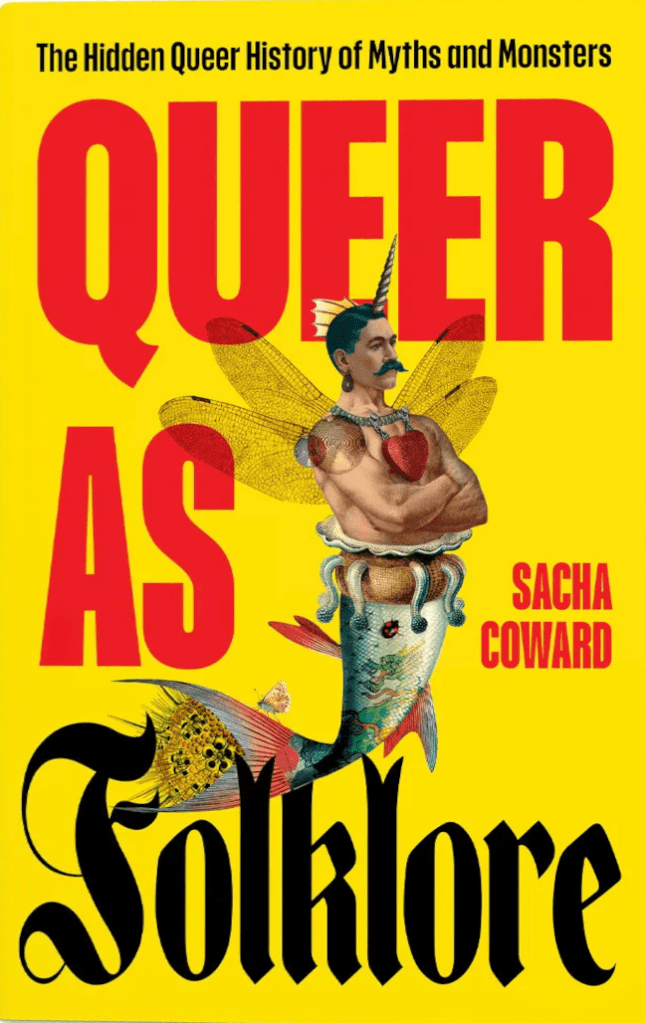
Queer as Folklore: The Hidden Queer History of Myths and Monsters by Sacha Coward
Queer as Folklore takes readers across centuries and continents which reveals the unsung heroes and villains of storytelling, magic and fantasy. Featuring images from archives, galleries and museums around the world, each chapter investigates the queer history of different mythic and folkloric characters, both old and new. Leaving no headstone unturned, Sacha Coward will take you on a wild ride through the night from ancient Greece to the main stage of RuPaul’s Drag Race, visiting cross-dressing pirates, radical fairies and the graves of the “queerly departed” along the way.
Queer communities have often sought refuge in the shadows, found kinship in the in-between and created safe spaces in underworlds; but these forgotten narratives tell stories of remarkable resilience that deserve to be heard. Join any Pride march and you are likely to see a glorious display of papier-mâché unicorn heads trailing sequins, drag queens wearing mermaid tails and more fairy wings than you can shake a trident at. But these are not just accessories: they are queer symbols with historic roots. To truly understand who queer people are today, we must confront the twisted tales of the past and Queer as Folklore is a celebration of queer history like you’ve never seen it before.
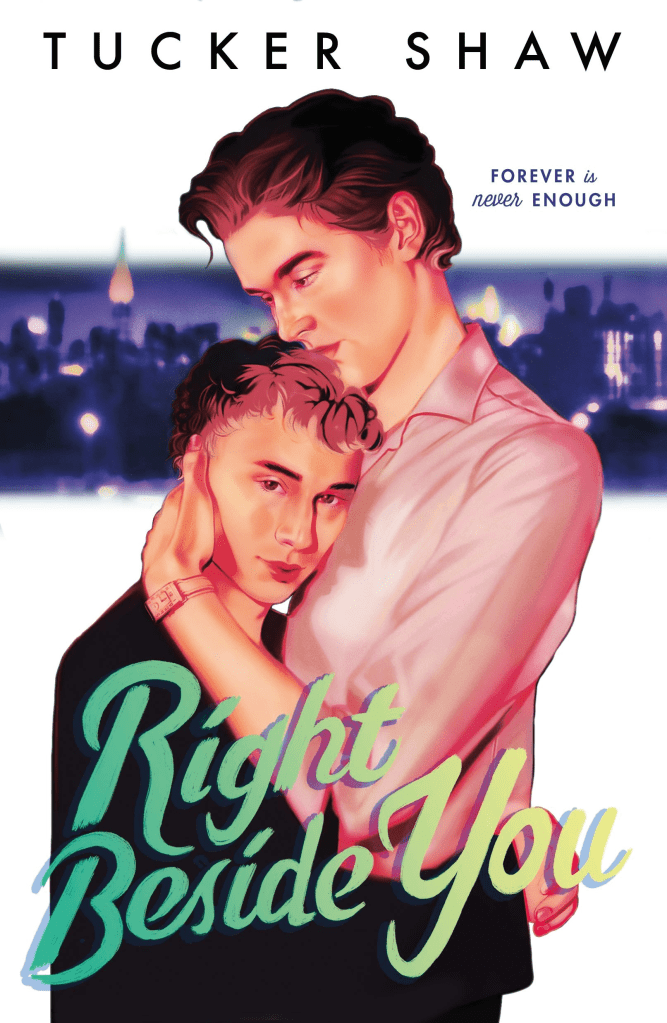
Right Beside You by Tucker Shaw
High school has just ended and Eddie is at a loss for what’s next. He had a falling out with his best friend, and he never really related to the rest of his peers in the sleepy Colorado town he calls home. The future is bleak. Until his ancient and eccentric great aunt Cookie asks him to care for her in New York City as she recuperates from an illness. Eddie leaps at the opportunity. Soon after he arrives at her tiny Greenwich Village apartment, homebound Cookie asks Eddie to use her vintage polaroid camera to snap pictures of her favorite places she can no longer visit. But something’s unusual about this camera. When he takes a photo, he’s launched back in time to an entirely different New York of the early 20th century.
As Eddie explores the underground queer life of the Roaring Twenties, he discovers new undercurrents of his own identity. Not to mention a dangerously handsome boy in scuffed boots and tattered stovepipe trousers who keeps popping up in his visions of the past. But when Eddie begins to develop a crush on the mercurial Francis, a cute baker named Theo enters the picture — and he’s in the present. Caught between timelines and feelings, Eddie must make a decision about what he’s willing to his romantic fantasies of the past or a reality that might just be what he’s wanted all along.
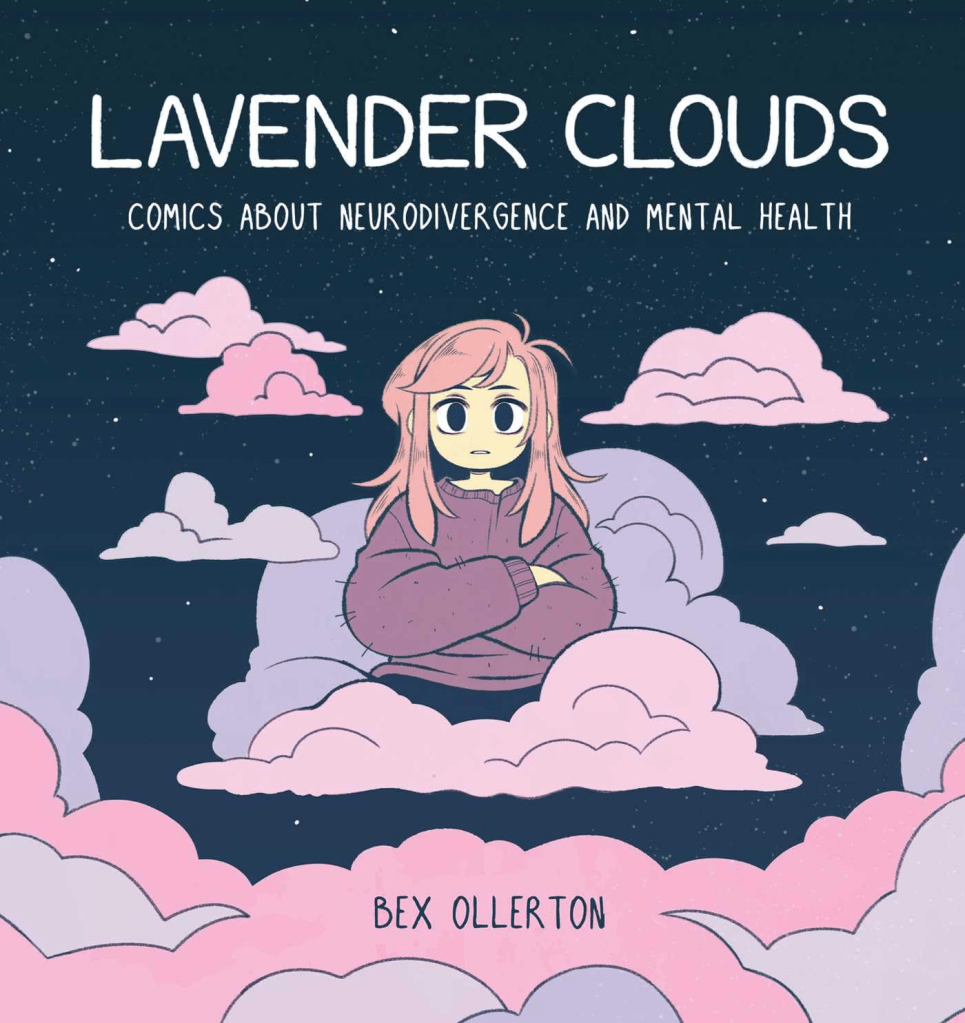
Lavender Clouds: Comics About Neurodivergence and Mental Health by Bex Ollerton
With a beautiful art style and a swift sense of humor, Lavender Clouds is breakthrough work from a leading voice in mental health comics. Eisner Award nominated author Bex Ollerton —known as @Schnumn to her thousands of followers — is a talented comic artist who feels energized and courageous on some days and exhausted and emotionally depleted on others. In Lavender Clouds, she translates her experiences with autism, ADHD, and mental health into a series of colorful, emotionally resonant comics that tell stories of neurodiversity and resilience.
With a tone that is sharp but always sensitive, this debut book collection describes the many insights and strategies the author has learned on her journey to self-acceptance. Among the many topics addressed in the book are the folly of “foolproof” organization strategies, the perils of burnout, the joy of small hopes, and the importance of growing at your own pace and on your own path. Breathtaking in its artistic range and emotional truth, Lavender Clouds offers an enlightening and uplifting read for anyone struggling with anxiety, depression, trauma, burnout, or other issues.

Love You Madly, Holly Woodlawn: A Walk On The Wild Side With Andy Warhol’s Most Fabulous Superstar by Jeff Copeland
By the mid-1980s, Holly Woodlawn, once lauded by George Cukor for her performance in the 1970 Warhol production and Paul Morrissey-directed Trash, was washed up. Over. Kaput. She was living in a squalid Hollywood apartment with her dog and bottles of Chardonnay. A chance meeting with starry-eyed corn-fed Missouri-born Jeff Copeland, who moved to Hollywood with dreams of “making it” as a television writer, changed the course of both of their lives forever.
Love You Madly, Holly Woodlawn is the story of how an unlikely friendship with a young gay writer and an, ahem, mature trans actress and performer created the bestselling autobiography of 1991, A Low Life in High Heels. This book about writing a book is a celebration of chutzpa and love as Holly, the embodiment of Auntie Mame, introduces Jeff to the glamorous (and sometimes larcenous) world of a Warhol Superstar. In turn, Jeff uses his writing (and typing) talent to give Holly the second chance at fame she craved. In turns hilarious and heartwarming, Love You Madly, Holly Woodlawn is a portrait of the real Holly who loved deeply, laughed loudly, and left mayhem in her wake.

Candy Darling: Dreamer, Icon, Superstar by Cynthia Carr
Warhol superstar and transgender icon Candy Darling was glamour personified, but she was without a real place in the world. Growing up on Long Island, lonely and quiet and queer, she was enchanted by Hollywood starlets like Kim Novak. She found her turn in New York’s early Off-Off-Broadway theater scene, in Warhol’s films Flesh and Women in Revolt, and at the famed nightclub Max’s Kansas City. She inspired songs by Lou Reed and the Rolling Stones. She became friends with Jane Fonda and Lily Tomlin, borrowed a dress from Lauren Hutton, posed for Richard Avedon, and performed alongside Tennessee Williams in his own play.
Yet Candy lived on the edge, relying on the kindness of strangers, friends, and her quietly devoted mother, sleeping on couches and in cheap hotel rooms, keeping a part of herself hidden. She wanted to be a star, but mostly she wanted to be loved. Her last diary entry: “I shall try to be grateful for life . . . Cannot imagine who would want me.” Candy died at 29 in 1974, as conversations about gender and identity were really just starting. She never knew it, but she changed the world. Packed with tales of luminaries and gossip and meticulous research, immersive and laced with Candy’s words and her friends’ recollections, Cynthia Carr’s Candy Darling is Candy’s long-overdue return to the spotlight.
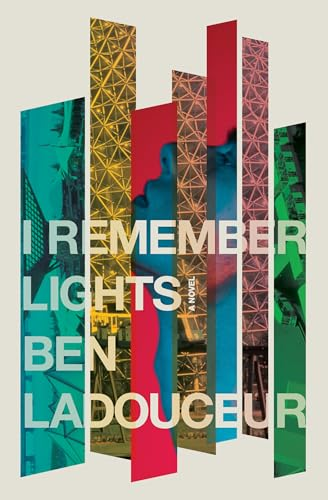
I Remember Lights by Ben Ladouceur
The first novel from award-winning poet Ben Ladouceur, I Remember Lights depicts a time when the world promised everything to everyone, however irresponsibly. In summer 1967, love is all you need… but some forms of love are criminal. As the spectacular Expo ’67 celebrations take shape, a young man new to Montreal learns about gay life from cruising partners, one-night stands, live-in lovers, and friends. Once Expo begins, he finds romance with a charismatic visitor, but their time is limited. When the fireworks wither into smoke, so do their options.
A decade later, during the notorious 1977 police raid on a gay bar called Truxx, he comes to understand even more about the bitter choice, so often made by men like him, between happiness and safety. I Remember Lights is a vital reminder of forgotten history and a visceral exploration of the details of queer life: tribulation and joy, exile and solidarity, cruelty and fortitude.
What were the best books you read this spring?

 Jeffrey Reads