
Self-Analysis Addict is an essay series examining the pop culture, books, and music that have shaped me as a person. It’s also a book of essays that you can purchase here.
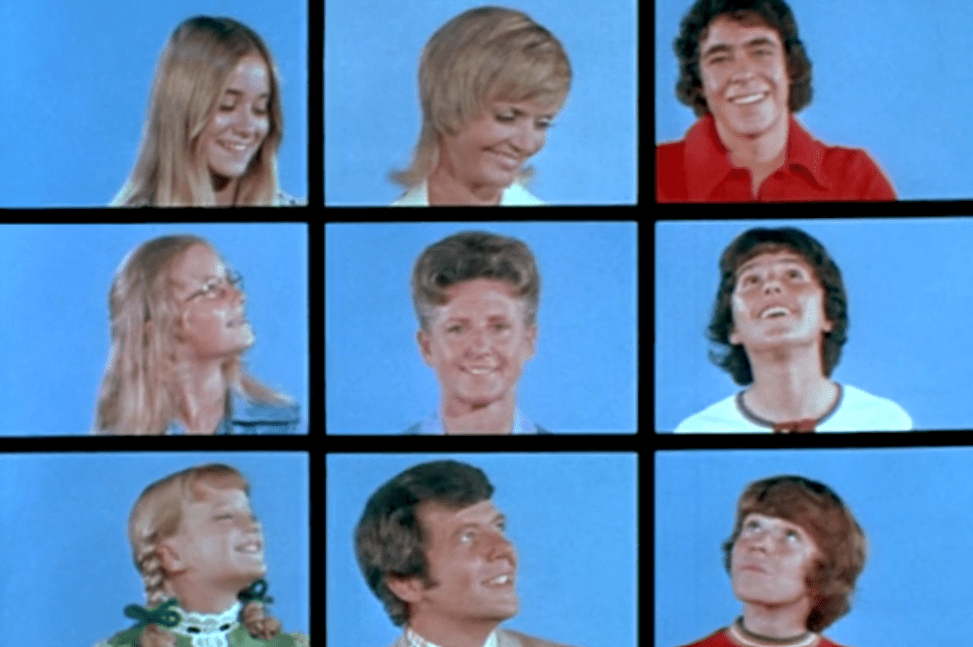
To have known me between the ages of seven and eight is to have lived through my intense, all-consuming obsession with The Brady Bunch.
It was introduced to me quite by accident the summer after first grade, when my aunt brought over a copy of the recently released complete first season DVD boxset to show my mom, a relic from their own childhood. It was the dawn of my curiosity for all things older than me, portals into a world that existed before I was born that I could experience and interpret for myself. As an only child, The Brady Bunch introduced me to a world with siblings — even though I never wanted them for myself, it allowed me to imagine what it might be like to be a part of a large “blended” family. In addition to launching my lifelong obsession with mid-century home décor, the Gen X cult classic sitcom taught me everything I knew about being a boy, and by extension, a man.
Boys like playing sports with their brothers, getting dirty in the yard. Boys detest all things girlie, except when it comes to getting the attention of a girl they like. Boys are chivalrous, always putting women’s needs ahead of their own, even if they don’t want to. Most importantly, boys only learn hard moral lessons when having a “man-to-man” talk with their father. The lives of the Brady family were not my own, but it was comforting to live with them for a half-hour at a time, where everything and everyone fell into their designated space and all conflicts were resolved before the end credits.
It would take me years to learn how much real life does not work like that. More specifically, it would take years to learn how boyhood doesn’t always look like that of Greg, Peter, or Bobby. How gender is a construct, masculinity a performance. I’d learn that moral lesson not from my own father, but from the real life of the man who played the Brady patriarch, Robert Reed.
Reed died of cancer, according to the personal life section of his Wikipedia page that I would always read, but that wasn’t how the adults around me saw it — there were also vague references to him being HIV-positive when he passed. It would only be well into adulthood, revisiting The Brady Bunch for the first time since childhood, did I realize the extent to which I was lied to. During the lockdown months of the pandemic, I read Kimberly Potts’ The Way We All Became the Brady Bunch, which details Reed’s internal battle with his homosexuality at a time when that label would have ruined his career.
The book explains how in the process of fighting his own demons, the actor would often take that out on the other adults around him — for example, Reed’s continuous arguments with the writers over script objections would ultimately explain the actor’s absence in several Brady Bunch episodes later in its run.
The conclusion of the series after five seasons is, in fact, attributed to creator and executive producer Sherwood Schwartz firing him over his objections to what would ultimately become the series finale, “The Hair-Brained Scheme.” Had ABC renewed The Brady Bunch for a sixth season, Mike Brady would have been killed off and the season would have followed the kids trying to help Carol find love again. In 2019, the New York Post referred to Reed as a “drunken diva” behind the scenes of the series.
But the network wouldn’t abide that. Since the series had already surpassed the minimum amount of episodes to enter syndication, they cancelled The Brady Bunch in 1974. And as any member of the latchkey generation can attest, it quickly became a beloved afterschool favorite during reruns, leading to a long string of revival series, television movies, and two theatrical spoofs in the ‘90s. Like it or not, the Bradys had left their mark on pop culture.
Of course, It wasn’t the writers or producers who Reed was angry with, it was with himself, the world, for not letting him be his authentic self. As far as my childhood was concerned, however, Mike Brady was the epitome of fatherhood and upstanding masculinity, a crucial role model for who I should grow up to be like.
“I just don’t understand why things just can’t go back to normal at the end of the half hour like on The Brady Bunch or something,” 23-year-old Lelaina Pierce (Winona Ryder) laments in the film Reality Bites. “Well, ‘cause Mr. Brady died of AIDS,” responds her friend and love interest, Troy Dyer (Ethan Hawke). “Things don’t work out like that.” Despite contradicting reports, Reed did not have AIDS at the time of his death but was HIV-positive, and his death certificate indicated that it was a contributing factor in his terminal state.
Similar to Robert Reed’s misplaced anger over his own repressed sexuality, my disappointment at the deception of the pop culture that had raised me was merely my own misplaced resentment over the early adulthood realization that real life isn’t like television, it isn’t like the movies. Either you choose to climb back up the rabbit hole, or you stay stuck down there forever. My inability to understand Reed’s private battle over his sexuality and ultimately the disease that killed him was no one’s fault; I was merely a child watching television. But television is especially powerful to a child who doesn’t fit in and has no clear role models for the life they might want to lead.
Now, most of us can culturally acknowledge that The Brady Bunch is not amazing television. Rather, it’s a comforting, nostalgic romp, a reminder of simpler days. It exists in a dimension all its own, as displayed best in 1995’s The Brady Bunch Movie, in which the Brady family are perpetually stuck in the fictional 1970s while the rest of the world has moved on to the capitalistic, consumer-driven (and frankly miserable) 1990s.
When I rewatched the original series earlier this year, it was almost as if I was revisiting a childhood fever dream; unlike most of my comfort shows, I don’t think I’d seen The Brady Bunch since fourth grade. Moreover, in an ironic twist, the first disc of the first season and the last disc of the final season of my original DVD copies of the series were scratched beyond function — so the beginning of the show and the end of it were somewhat lost to the deeper confines of my memory. Some episodes, until I saw them again this time around, I was sure I had hallucinated as a kid.
Perhaps it’s kinder to say that The Brady Bunch accomplished what it set out to do, until it didn’t. What made the Bradys seem stuck in time was that it didn’t allow the subject matter of the series to grow with its characters. By the fourth and fifth seasons, Greg (Barry Williams) and Marcia (Maureen McCormick) were older teenagers in their later years of high school, yet the storylines written for the show were still somehow targeted for eight-year-olds. Many other series that followed in the footsteps of the Bradys, namely The Facts of Life, were able to correct this flaw in the formula, allowing their productions to age with their characters and viewers. As adults, however, it’s still satisfying to return to the land of perpetual childhood that is The Brady Bunch.
It’s impossible to know, and yet I still wonder, how my world would have been shaped had there been more than one option for masculinity in the pop culture I devoured as a child. If I’d learned what it meant to be gay from a young age in the same passive osmosis of pop culture that fed me lies of masculinity, as opposed to the version snickered in the schoolyard. If Bert and Ernie were officially allowed to be a couple in the eyes of PBS. If, after his first wife died, Mike Brady remarried a man instead of Carol.
To be queer is to long for a history that never was but could have been, and spending our entire lives learning how to properly cope with that ache. In the end, it wasn’t the actors who let me down, it was pop culture, my first unrequited love. So all I can do is memorialize my heroes, the performers who taught me that being a man in real life is just as much a performance as the ones they played on the screen.



 Jeffrey Reads