20 Questions is a Q&A interview series with authors, musicians, and everyone in between, celebrating experiences both shared and individual in the messy game of being human.
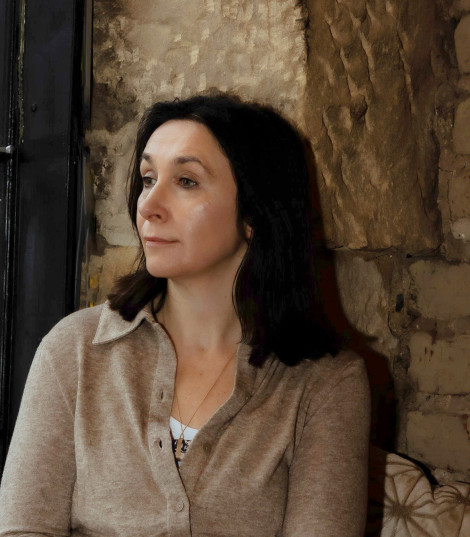
“Pop culture is everything. It reflects our values, and that of society, and offers a window into a specific time. It should move us, and it should excite us and get our own creative juices flowing.” Caroline Young is a freelance writer and author from Edinburgh, Scotland, specializing in fashion, pop culture, and classic cinema. She is the author of an impressive list of non-fiction titles, including but not limited to The It Girls, Audrey in Paris, Crazy Old Ladies, Hitchcock’s Heroines, The Fabulous Frances Farquharson, and Living with Coco Chanel. Her latest book, Single & Psycho: How Pop Culture Created the Unstable Single Woman, is available everywhere now, and she joins me for a new edition of 20 Questions to talk all about it and how pop culture is both powerful and dangerous.
What is the earliest memory you have of wanting to be a writer?
My grandad had an old typewriter and from a very young age, maybe five or six years old, I was typing out mini bios about myself and my family, and I particularly loved writing haunted house stories. So the desire to be a writer was always there.
What time of day are you most inspired?
I’m such a morning person, and the earlier the better for writing! I find the quiet and the freshness of 6 a.m. so inspiring. I even enjoy jetlag because it means I’ll wake at a ridiculously early time. One of my best travel memories is of being unable to go back to sleep after arriving in New York the night before, and just wandering the deserted streets as delivery drivers were unloading their trucks and cafes were just opening their shutters.
Favorite book of all-time?
The Beach by Alex Garland. I was really into backpacking when I read it, and I carried my crumpled paperback with me on trips to Mexico and Australia. It also inspired me to start writing a similar (and as yet unfinished) backpacker novel set in Goa when I was in my twenties.
What’s one vice you wish you could give up?
I’m quite happy with all my vices — I’m not prepared to give up the coffee or the glass of wine of an evening, thank you!
One movie that will always make you cry?
I do get very emotional when I watch sad films, and World War II movies in particular set me off. I cried through most of 1917 and by the end of Atonement I was a mess. Waterloo Bridge with Vivien Leigh is another heartbreaker. And while the film version of David Nicholls’s One Day wasn’t as good as the book, I was in floods of tears at the end credits.
What’s the most challenging part of writing for you?
Often, I have too many ideas popping into my head and competing with one another, so I find it really challenging to focus on just one. Sometimes I just need to take a breath, and streamline my thoughts, so I don’t get too carried away.
The best book you’ve read in the last year?
Yellowface by R.F. Kuang. It was just so addictive and touched on a lot of cultural points.
Much of your work centers around pop culture. What do you make of the ways that it serves as an escape while also providing an avenue through which to better understand ourselves?
Pop culture is everything. It reflects our values, and that of society, and offers a window into a specific time. It should move us, and it should excite us and get our own creative juices flowing. It helps us think about who we are in the world, and how we relate to other people. I think we all have an experience where we bonded with someone over a song we love, or a TV show we just watched, or a book we’re reading!
The last series you binge-watched?
La Palma — a Norwegian drama about a tsunami which was such an easy watch. And it was another one where I was in tears at different points.
As a writer and artist, what would you say is the best way to rest or decompress?
Stepping away from the desk by going for a long walk, or doing a really energetic exercise class to get the blood flowing again. Walking is a great way to refocus, and it’s often the time when I’ll find the answer to a troubling section of writing.
The best piece of advice you’ve ever received?
Things always happen for a reason, and what’s meant for you won’t pass you by. I tell myself that all the time, and there’s a truth to it. You might not get the job you wanted but a better one is around the corner, the person who dumped you did you a favor, and I think I had a baby at the time I was supposed to.
If you could have one writer, dead or alive, to compose your obituary, who would it be and why?
Sylvia Plath, because she might be able to delve into my dark side and uncover the complexity in me.
One song that you will never be sick of?
“Yoga” by Björk.
Your latest book Single & Psycho: How Pop Culture Created the Unstable Single Woman also touches on your own fight against stigma as a single woman, as well as your struggles with infertility. What do you make of the ways that pop culture can be harmful when taken at face value?
We absorb the messages of pop culture in more ways than we know, and it can be incredibly toxic for young people during those vital years when they are trying to work out who they are. In my book I explore the ways single women have been treated in pop culture, whether that’s as the tragic spinster of films like Now, Voyager to Alex Forrest in Fatal Attraction. And while I try to bring a a sense of fun to the discussion, the legacy of Fatal Attraction is that it left women feeling so anxious about being called out as a bunny-boiler, that they put up with terrible treatment.
The images we are fed through advertising and media can also be terrible for our sense of self. When I was growing up in the ‘90s I couldn’t help but compare myself unfavourably to the women in lad’s mags, but it must be so much worse for girls now, with Instagram curating this lens of extreme perfection. And with figures like the Kardashians pushing a certain artificial look, it leaves people feeling like they aren’t good enough in their natural state.
What’s your current read?
I tend to have about five books on the go at the same time, and at the moment I’m reading Jack Tapper and Alex Thompson’s Original Sin, about Joe Biden, Hit Girls by Nora Princiotti, an account of the female pop stars of the noughts, and The Hitchcock Hotel by Stephanie Wrobel, which is a page turner about a Hitchcock fan who invites a group of friends to stay at his themed hotel.
You’re stuck on a long flight. Which world-famous musician would you want sitting next to you and why?
Self Esteem — I think she’d be wicked fun, we would probably connect on the same level, and her music taps into the themes of Single & Psycho, so I’m sure we’d have a great conversation.
Favorite quote of all-time?
Mary Heaton Vorse: “The art of writing is the art of applying the seat of the pants to the seat of the chair.”
How would you describe the importance of storytelling in an age of social isolation?
Storytelling is how we connect to other people, and so I think it’s more important than ever. Culture nowadays is so much more disjointed because there’s too much choice, and so we don’t bond over films and TV shows and books in the same way as we used to. Interestingly, there was a real collective experience during lockdown, of listening to the same music, watching shows like Tiger King and Bridgerton, and this was a period when we were at out most isolated. So I think we all really crave these shared experiences, and storytelling is a means of relating to one another.
Laptop or desktop?
Laptop, because I like to switch around and change my workspace all the time.
What can we expect to see next from you?
I have a book on Taylor Swift coming out later in the year, and I’m currently finishing my manuscript for an exploration of the costumes in Hitchcock films. You can find out more on my website!
Follow Caroline Young on Instagram and get her latest book Single & Psycho: How Pop Culture Created the Unstable Single Woman from your local indie bookstore or library.