
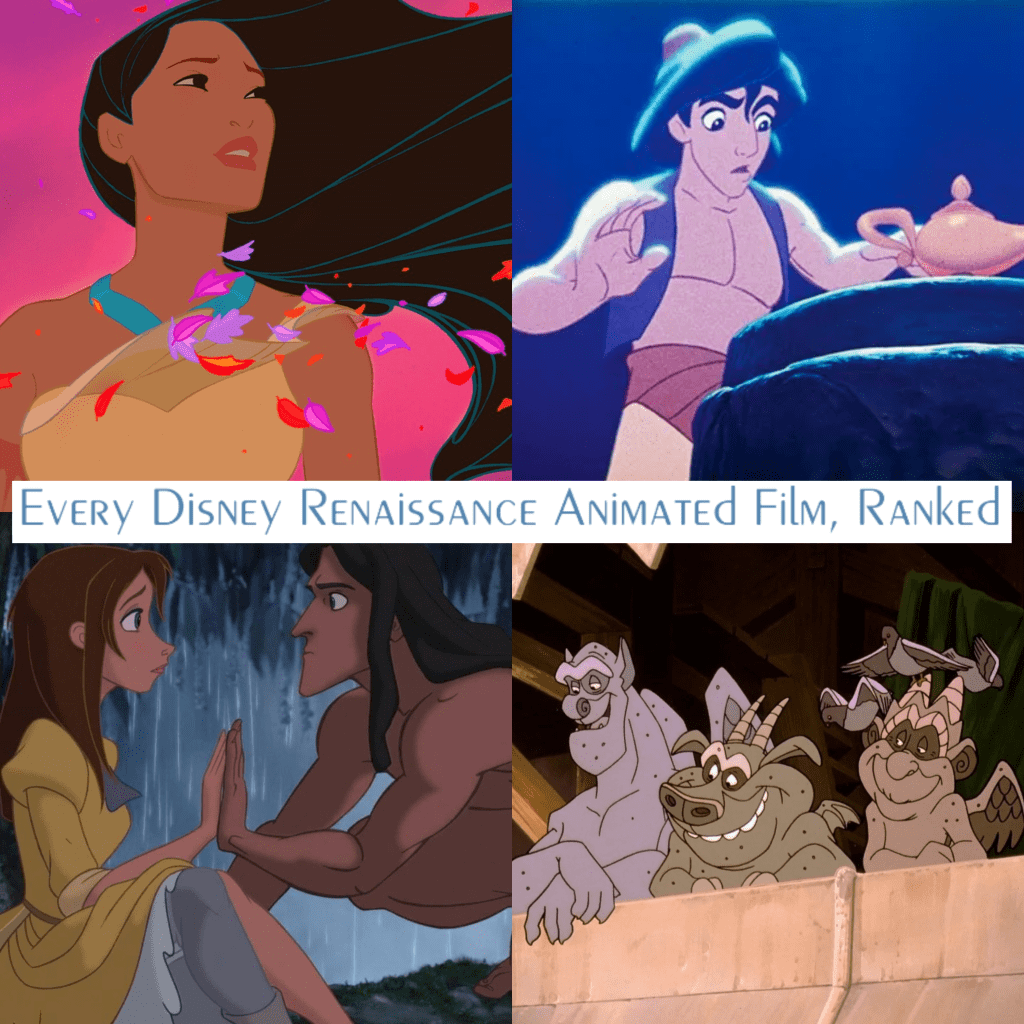
A few months ago, I was dealing with a death in the family that threw everyone for a loop, causing everyday life to feel dysregulated for a bit. Without explanation, I found myself returning to the classic animated films of my childhood to self-soothe, a habit I tend to repeat every few months or years regardless of difficult situations — because sometimes being an adult really sucks and you just need to relive the simplicity of your childhood for roughly 90 minutes at a time, okay? I’m a Disney Adult™ through and through and I will never apologize.
Initially, I told myself I was going to do a Don Bluth marathon and even introduce myself to some of his animated films that I’d never seen before. But that got boring quick, and I realized that while Bluth might’ve had Disney Animation Studios in a chokehold for an ever-brief moment in the mid-‘80s, his reign was short-lived, and his films — outside of An American Tail or Anastasia — have not held up. And watching Don Bluth animated films just made me want to relive the true animated classics of my own youth, the films that continue to creatively inspire me well into adulthood and I hope that never ends. I am, of course, referring to the animated features produced during the Disney Renaissance.
If you’re unfamiliar with the Disney Renaissance era — which, frankly, you shouldn’t be — it refers to the period of time between 1989 and 1999 when the Walt Disney Company, and especially Disney Animation Studios, enjoyed a tremendous return to mainstream success and profitability after nearly a decade of financial and creative turmoil. (Don Bluth was originally an animator for Disney, and he infamously kicked the company when it was down by leaving to start his own animation company, taking several established animators with him.) Disney, however, had the last laugh, partially thanks to the reign of Michael Eisner and Roy E. Disney, but owed in large part to the creative contributions of Howard Ashman, a lyricist and producer responsible for The Little Mermaid and Beauty and the Beast. His story, if you’re also unfamiliar, is necessary reading.
So, over the course of about a month, I rewatched all of Disney’s animated features produced during the Renaissance in the order in which they were released, the first time I had ever watched them chronologically, and have ranked them here for your reading pleasure. A child of the ‘90s and ‘00s, my Disney Renaissance rankings are, of course, partially influenced by my own taste and nostalgia, two things that are inescapable while revisiting media from your childhood. But as a writer who has analyzed many a piece of pop culture, I also evaluated these animated films from a critical point of view, taking into account animation style and detail, storytelling, and overall filmmaking. My choices and opinions will not align with yours, and that’s what I find so fun about the Disney fandom in particular: very few of us see eye to eye on the movies, but what we take from Disney media is the same. Without further ado, ranked from best to worst, these are my rankings of the 10 animated films released during the Disney Renaissance.
1. Beauty and the Beast (1991)
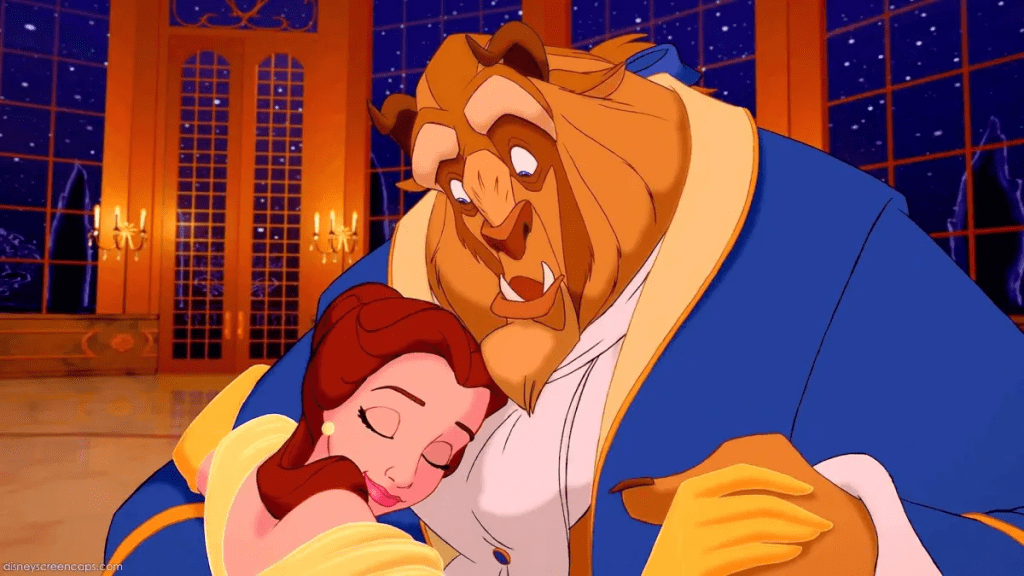
It’s simply the best. There is no other way to put it. From the colorfully animated characters and landscapes to the musical characterizations and talking teacups, Beauty and the Beast is the best Disney film to come out of the Renaissance, hands down. Walt Disney had, in fact, briefly developed ideas and storyboards for a potential adaptation of the Beauty and the Beast fairy tale in the 1940s, with nothing ever materializing. And the adapted tale we know and love today could have been very different from what it was: initially, Disney animators were going off of Walt’s old sketches to develop a film that wasn’t supposed to be a musical, and the results were dismal. Howard Ashman, coming off the grand success of The Little Mermaid, was hard at work with composer Alan Menken on what would eventually become Aladdin, but when Disney came to him asking for help with Beauty and the Beast, it was clear his input was desperately needed. Long story short, Ashman’s improvements indirectly helped Beauty and the Beast become the first animated feature film in history to be nominated for Best Picture at the Academy Awards. To be shamelessly cliché about it: it’s just pure Disney magic.
2. The Little Mermaid (1989)
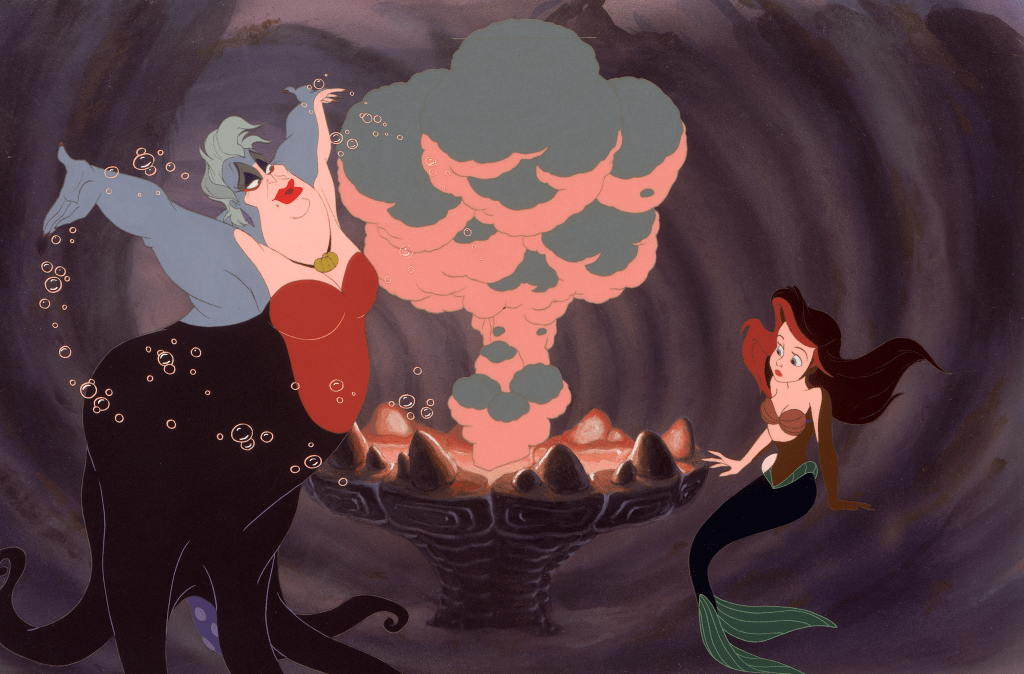
If Beauty and the Beast is the best animated film to come out of the Renaissance, The Little Mermaid is literally and figuratively a very close second. Not only because it was the film that started the Renaissance period itself, but because it’s just a damn fine animated film. The Disney Renaissance occurred as a result of multiple successes, but it was the company’s choice to both return to the fairytale adaptations of Disney’s earliest decades and hire Ashman to write the music and eventually produce The Little Mermaid that sealed the deal (no pun intended). Ashman is generally credited with bringing a Broadway musical flare to Disney animation, one that appealed to wider audiences of moviegoers besides children. One of his most famous contributions, and there are many, is the concept of the “I Want” song, generally in which the main protagonist of the film has a moment to themselves where they sing about what they’re most yearning for in this life — a method of endearing the character to their audience. And to think Jeffrey Katzenberg almost cut “Part of Your World” from The Little Mermaid completely.
3. Aladdin (1992)

One thing about Aladdin that is consistently engaging and entertaining for me in the age of Disney+ is how breathtakingly beautiful the animation is. Until I rewatched the film for the first time on the streaming app some years ago, I realized that it was one Disney movie I’d only ever watched on VHS, never on DVD or anything digital. While every millennial Disney marathon lacks the nostalgic, fuzzy quality of your beloved family videotapes in the year 2025, it really strikes me just how well animated Aladdin is. Which is not to say the storyline, music, and voice acting aren’t amazing — because they are — but Ashman’s influence is still deeply felt throughout this film as well, despite production concluding and its release occurring after his death from AIDS in 1991. Tim Rice was a worthy successor to finish writing the lyrics for the film. What’s the most memorable about Aladdin, I think, is the personality of its characters, and the creation of the Genie character for Robin Williams deserves its own article entirely. Despite some racial objections to Aladdin in the 21st century, it’s still rightly one of the top-ranking Disney Renaissance animated films.
4. Mulan (1998)

Okay, this might be the one instance on this list where an animated film is ranked high more because of my own personal feelings towards it rather than its aesthetic quality as a film. However, Mulan is still a great Disney movie in its own right. It meant a lot to me as a queer kid growing up and is probably the earliest piece of media that taught me how gender is a construct we shouldn’t let stop us from doing the right thing. The music, screenplay, and choice of actors for the voices are also all top notch. From Ming-Na Wen’s compelling delivery of the title character to Eddie Murphy’s unforgettably hilarious turn as her feisty dragon sidekick, Mushu — you certainly cannot argue against Mulan’s ability to both entertain and inform its audience. We also cannot discount “Reflection” as one of the best Disney songs of all-time, a number I definitely saw myself in as a kid. Plus, it introduced one of the next generation’s grandest vocal talents courtesy of its soundtrack, one Miss Christina Aguilera. Above all, Mulan is a masterpiece for teaching its young audience that late bloomers usually have the last laugh. Also, it’s been 27 years since this film came out and I’m still scratching my head at the pairing of Stevie Wonder with 98 Degrees for the end credits song “True to Your Heart” — which is still a bop, don’t get me wrong, but what a ‘90s collaboration.
5. Tarzan (1999)
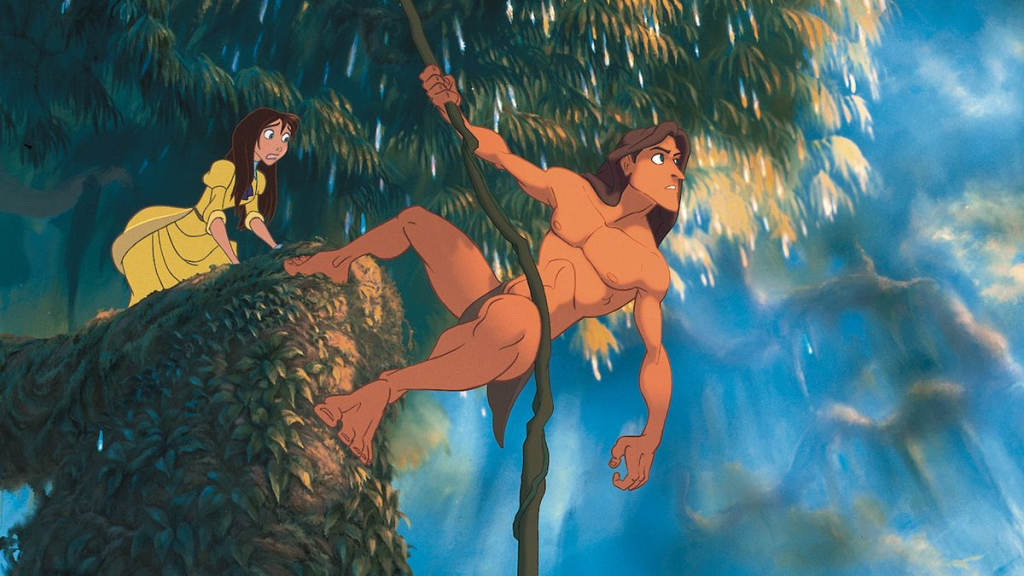
Alright, alright, I know what you’re going to say, this one is relatively far up on the list because of Phil Collins’ masterful soundtrack that millennials and Gen Z still can’t stop talking about. And yes, that’s partially it — I don’t know what possessed Phil to go so hard with songs about monkeys, as the Internet usually puts it, but he did that for all of us and they’re still amazing songs. But Tarzan is a great film for its own reasons independent (somewhat) of its soundtrack. Aside from centering around the classic Disney trope of how we’re most scared of people who are different from us, and doing it well, the film’s animation is amazing. It’s a great example of Y2K-era feature film animation on the cusp of the 21st century, which would soon begin to phase out 2D-animated films completely. From the landscapes to the characters themselves, the blend of 2D animation with CGI is truly remarkable. Phil Collins’ soundtrack might be the driving force that keeps bringing us back with those earworms of his, but the real reason Tarzan still resonates over a quarter-century later is the compelling nature of its presentation, both visually and textually. Also, can we please put some respect on Jane’s name as an underrated Disney Princess? Sure, she’s not a “princess” perse, but still a badass Disney female who experiences so much character development and growth that she needs more fans. Or, at least, I need to meet more of her fans.
6. The Hunchback of Notre Dame (1996)
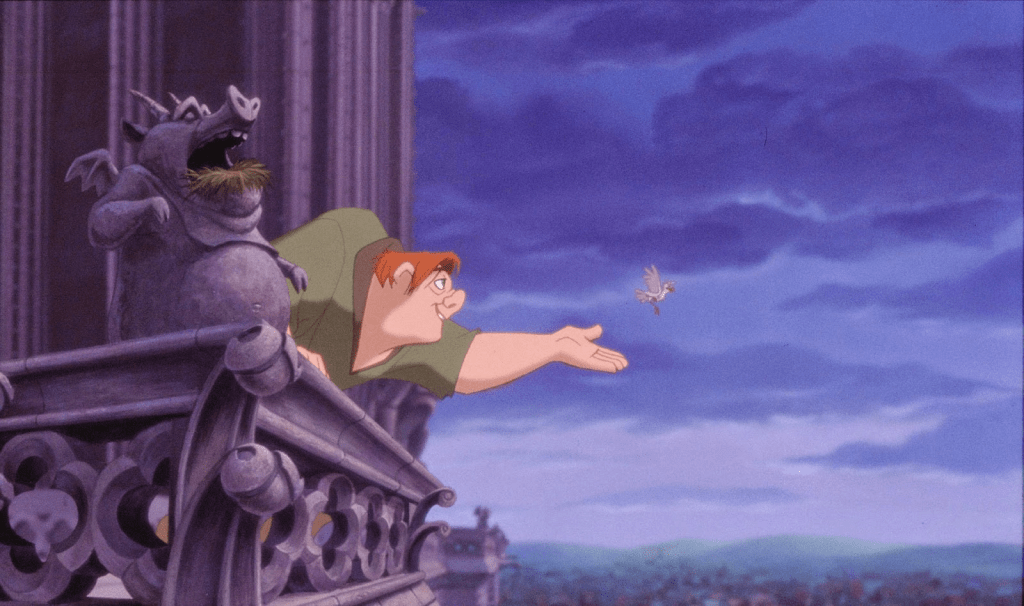
Full disclosure that The Hunchback of Notre Dame is the one Disney Renaissance animated film that I have seen the least amount of times. The rewatch for the writing of this list was only the third time I had watched it in its entirety. It’s frequently cited as one of the darkest Disney animated films (though not quite as dark as some portions of Pinocchio or Fantasia, I would argue), and while I would agree much of its subject matter would go over the heads of younger viewers, this is one Disney movie I was happy to have only watched for the first time once I was older. I was totally in shock at how truly dark the screenplay can get at times, having gone into it expecting a fun sing-songy Disney experience, but I can’t argue against it being one of the best animated feature films ever produced. I was initially thinking it would rank much lower on this list, just given that I haven’t seen it as many times as its peers and my memory of its screenplay being dark and somewhat inaccessible, but The Hunchback of Notre Dame is a great film and even has some moral lessons to impart in its younger viewers who can stomach their way to the end. Speaking of underrated Disney Princesses, Esmeralda (voiced flawlessly by Demi Moore) deserves the same kind of praise and attention as Aladdin’s Princess Jasmine, with whom she shares some aesthetical value.
7. Pocahontas (1995)

I didn’t love Pocahontas a lot as a kid but I have come to appreciate it more as an adult, despite some of its more blatant flaws that are more evident to me now. But let’s focus on the positives first: its animation is stunning, similar to that of Tarzan, but with less CGI integration. The landscapes and use of colors in Pocahontas’ village and beyond are beautiful. “Colors of the Wind” is another number that should definitely rank among the best Disney songs of all-time. Despite criticism for its romanticization of a number of things, among them that the real-life Pocahontas was allegedly around 11 years old and Disney chose to age her older so she and John Smith might become love interests, Pocahontas borrows some story elements from The Little Mermaid and teaches its youngsters that following your heart is the most important thing of all. Which, for a viewing experience devoid of critical thinking, makes for another great Disney movie. But when examining Pocahontas critically, it is a bit difficult to ignore its depiction of racism as something that can be solved by all of us just stopping and loving each other more — which is the reason I chose to rank it a bit lower on this list than I had originally planned. I’m not typically a Pocahontas critic, however, and will gladly defend its stronger qualities to the death.
8. Hercules (1997)

I wasn’t a Hercules kid so I think that really solidified my feelings about it, and they haven’t changed. And on paper, I think I just keep expecting Hercules to be better than it is, given that John Musker and Ron Clements — acclaimed for their direction of The Little Mermaid and Aladdin, among others — returned to direct it, and it’s just so subpar in comparison to their predecessors. My biggest criticism of Hercules is the same as it was when I was a kid: it’s just so forgettable. I’ve seen it a number of times, despite it never being a Disney movie I ever owned in physical format, and each time it’s like I’m watching it for the first time, which is not intended as a compliment. Also, I know I’m going to ruffle some feathers here, but I’ve never cared for the Greek Muses who narrate the story. I know, I know! They have so many dedicated fans, and I get their narration is akin to something like a chorus in a Greek tragedy. But I noticed it especially watching it this time around that they just really pull me out of the story, probably because they were designed to be so memorable. I think I would have preferred them to be characters similar to Quasimodo’s stone gargoyle friends in The Hunchback of Notre Dame. However, I will commend it for “Go the Distance,” another classic Disney number. All hail Michael Bolton.
9. The Rescuers Down Under (1990)

I don’t have anything against The Rescuers Down Under. Really, I don’t! Its original film, The Rescuers, is probably among my top 5 all-time favorite Disney animated films. In fact, I saw Down Under long before I ever saw the first film, solely because of its release on VHS among other Disney Renaissance animated films, so my mom introduced it to me early. This is just a classic case of right place, wrong time. If we’re wearing our critic’s hats here, The Rescuers Down Under just does not compare on any level to any other animated film from the Disney Renaissance. One could even argue that no one even really knew that the Renaissance was underway when it was released. The Little Mermaid had come out a year earlier and set the stage for a big comeback, but Down Under had been in the works before that, developed as a result of newfound popularity for The Rescuers in video rentals. And a little known fact about The Rescuers Down Under is that it was the first feature animated film in history to be made entirely digitally, which pioneered new methods of animation that aided the rise of the Disney Renaissance and its renewed success with its animated films. But Jeffrey Katzenberg didn’t like Down Under, and after it had a disappointing first weekend at the box office, he killed television promotion for it and told everyone to move on, so it went down in history as a box office bomb. While some think Down Under superior to The Rescuers, I disagree, another explanation for its low ranking on this list.
10. The Lion King (1994)

Okay. This is the one I know I’m going to catch hell for, and why everyone who reads this list is likely to disregard it as entirely incorrect, all because of where I’ve ranked this one particular film — which happens to be so many people’s favorite Disney film of all-time, let alone in the Disney Renaissance era. I will accept my fate if it means speaking my truth: The Lion King is nothing special. There, I said it! I don’t understand why people love it so much. Textually speaking, it is the weakest animated film of the Disney Renaissance, a clear pastiche of Shakespeare’s Hamlet. There’s absolutely nothing wrong with retellings; sometimes they are done really well and they introduce a new generation to a previous one’s classic. But there’s really nothing revolutionary about The Lion King’s repurposing of Hamlet. The music is fine, I guess, but it pales in comparison to the soundtrack of any number of other Renaissance animated films. I don’t have anything against Elton John — who co-wrote the soundtrack with Tim Rice — but “Can You Feel the Love Tonight” has never given me that classic Disney number sensation. Not every great animated musical film needs an “I Want” song (although future filmmakers should definitely consider it), but I think The Lion King would have improved greatly had the music been better. Sure, you could argue “I Just Can’t Wait to Be King” is the film’s “I Want” song, but I think these types of musical numbers do better with female protagonists. I know I will die on this hill, likely alone, but I’m okay with that: The Lion King has too many weak points to be considered the masterpiece most people think it is, and I’ll be here for anyone willing to discuss its flaws.
Which are your favorite animated films from the Disney Renaissance?


 Jeffrey Reads