
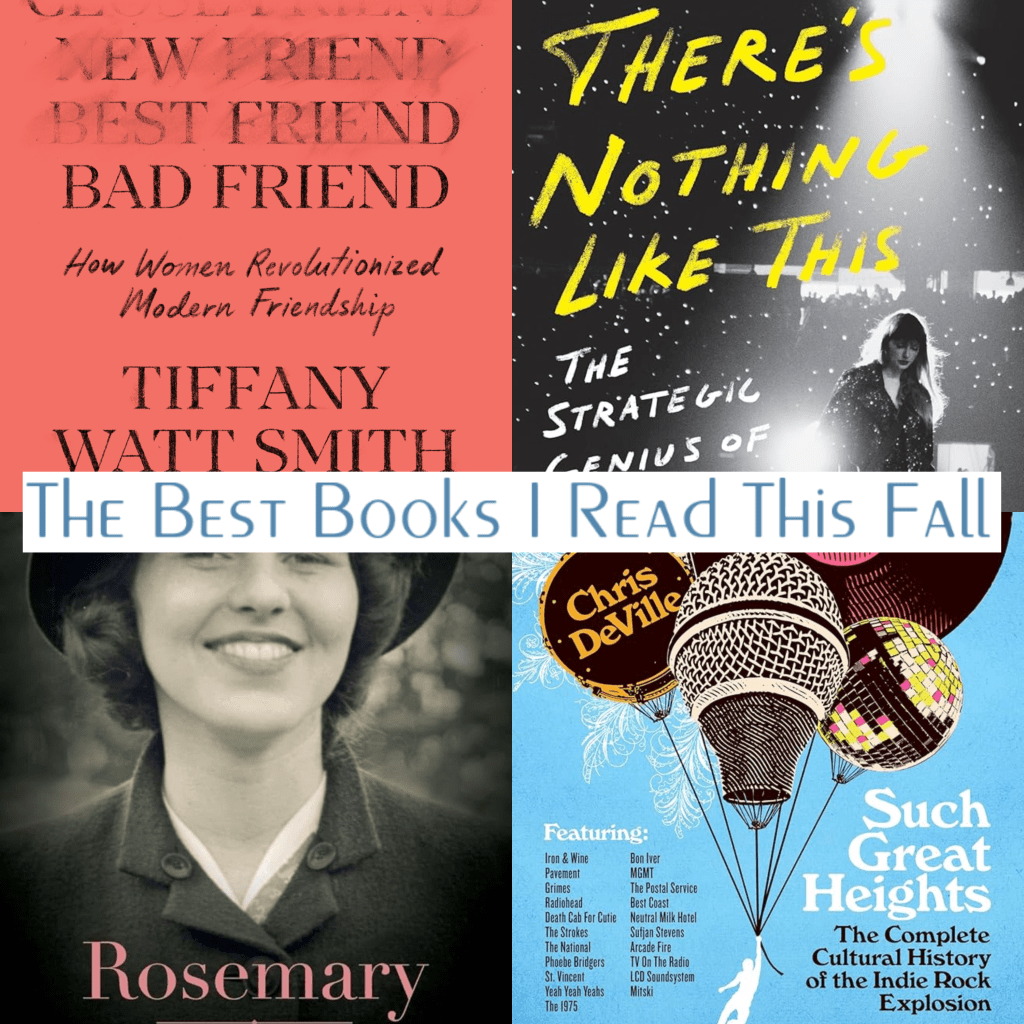
Welcome to the latest (and very late!) edition of The Best Books I Read This Season. Although fall only officially ended yesterday, we book lovers tend to think of the start of winter as soon as snow hits the ground in December. I hope wherever you are that the weather is perfect for your holiday season, and maybe you can add some of these titles to your TBRs during Boxing Week sales. Scroll on for the best books I read this fall.

It’s Not You: Identifying and Healing from Narcissistic People by Dr. Ramani Durvasula
It’s not always easy to tell when you’re dealing with a narcissist. One day they draw you in with their confidence and charisma, the next they gaslight you, wreck your self-confidence, and leave you wondering, What could I have done differently? As Dr. Ramani Durvasula reveals in It’s Not You, the answer absolutely nothing. Just as a tiger can’t change its stripes, a narcissist won’t stop manipulating and invalidating you. To heal in the aftermath of their abuse and protect yourself from future harm, you first have to accept that you are not to blame.
Deeply compassionate and revelatory, It’s Not You examines how narcissists hijack our wellbeing and offers a healing path forward. Drawing on more than 20 years of studying, teaching, and helping clients navigate the landscape of narcissism, Dr. Durvasula unpacks the oft-misunderstood personality, showing how to identify the telltale signs that you may be dealing with a narcissist and protect yourself from their toxic influence. Along the way, you’ll learn how to become gaslight resistant, chip away at the trauma bonds that keep us stuck in these cycles, grieve the losses, create realistic boundaries, learn the fine art of discernment, and recover your sense of self after years of invalidation. Healing and thriving after or even during a narcissistic relationship can be challenging, but it is possible. It’s Not You shows that the first step is to stop trying to change the narcissistic person, stop blaming yourself, and start giving yourself permission to foster your autonomy and sense of self outside of this relationship.
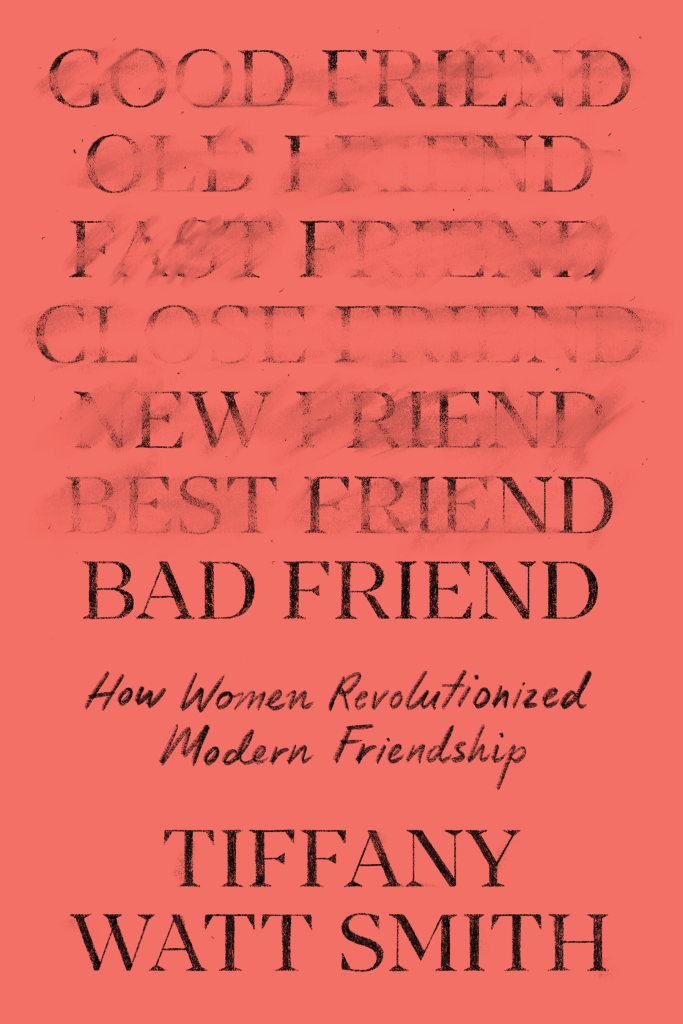
Bad Friend: How Women Revolutionized Modern Friendship by Tiffany Watt Smith
Our culture today is inundated with narratives about the strength of female friendship, whether through images of girl power, BFFs, or work wives. Yet cultural historian Tiffany Watt Smith has always found her own life much messier. She has had dramatic friend breakups, friendships that felt like too much or not enough, friendships that drifted into silence, and friendships built on convenience rather than a meeting of minds. And there are older cultural scripts to contend the competitive rival, the jealous backstabber, the underminer, the fair-weather friend. We have all been bad friends. It’s impossible to be a perfect one; as Watt Smith points out, women’s friendships have long been magnified, scrutinized, praised, and admonished, creating a legacy of impossible ideals. In Bad Friend, Watt Smith reflects on her own experience and thoroughly mines the rich cultural history of female friendship to look for a new paradigm that might encompass the struggles along with the joy.
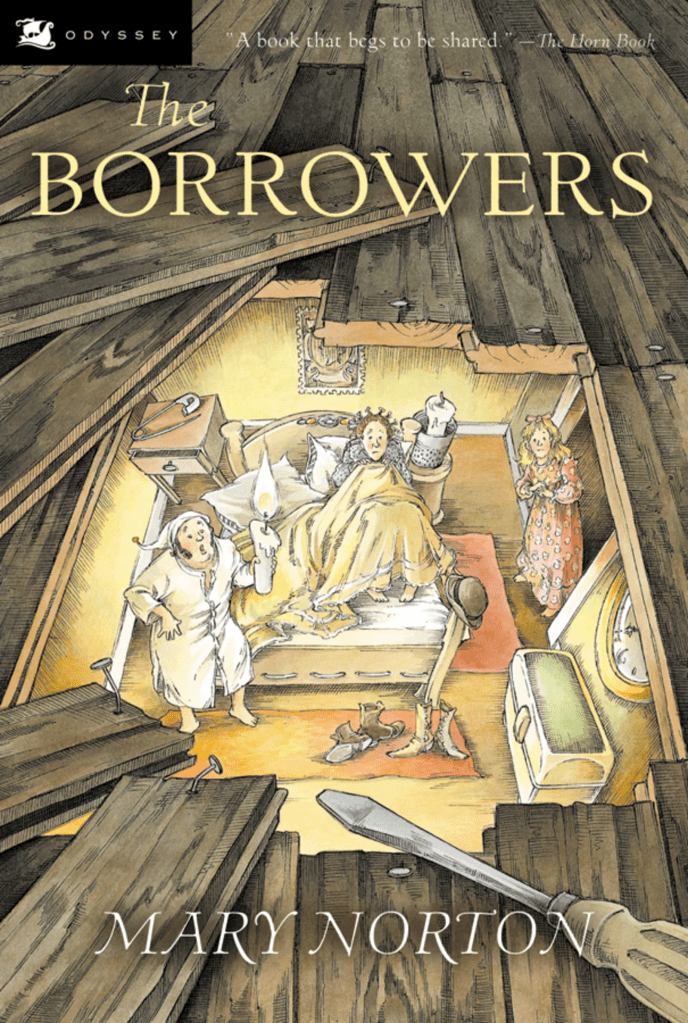
The Borrowers by Mary Norton
Beneath the kitchen floor is the world of the Borrowers — Pod and Homily Clock and their daughter, Arrietty. In their tiny home, matchboxes double as roomy dressers and postage stamps hang on the walls like paintings. Whatever the Clocks need they simply “borrow” from the “human beans” who live above them. It’s a comfortable life, but boring if you’re a kid. Only Pod is allowed to venture into the house above, because the danger of being seen by a human is too great. Borrowers who are seen by humans are never seen again. Yet Arrietty won’t listen. There is a human boy up there, and Arrietty is desperate for a friend.
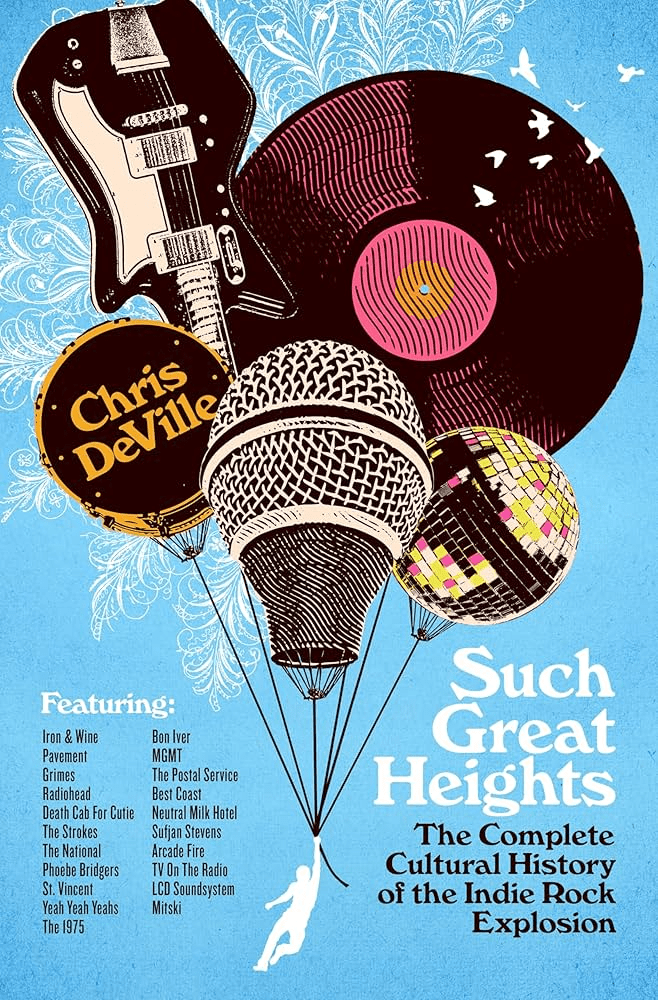
Such Great Heights: The Complete Cultural History of the Indie Rock Explosion by Chris DeVille
The definitive history of twenty-first-century indie rock — from Iron & Wine and Death Cab for Cutie to Phoebe Bridgers and St. Vincent — and how the genre shifted the musical landscape and shaped a generation. Maybe you caught a few exhilarating seconds of “Teen Age Riot” on a nearby college radio station while scanning the FM dial in your parents’ car. Maybe your friend invited you to a shabby local rock club and you ended up having a religious experience with Neutral Milk Hotel. Perhaps you were scandalized and tantalized upon sneaking Liz Phair’s Exile in Guyville from an older sibling’s CD collection, or you vowed to download every Radiohead song you could find on LimeWire because they were the favorite band of the guy you had a major crush on.
However you found your way into indie rock, once you were a listener, it felt like being part of a secret club of people who had discovered something special, something secret, something superior. In Such Great Heights, music journalist Chris DeVille brilliantly captures this cultural moment, from the early aughts and the height of indie rock, until the 2010s as streaming upends the industry and changes music forever. DeVille covers the gamut of bands — like Arcade Fire, TV On The Radio, LCD Soundsystem, Haim, Pavement, and Bon Iver — and touches on staggering pop culture moments, like finding your new favorite band on MySpace and the life-changing O.C. soundtrack.
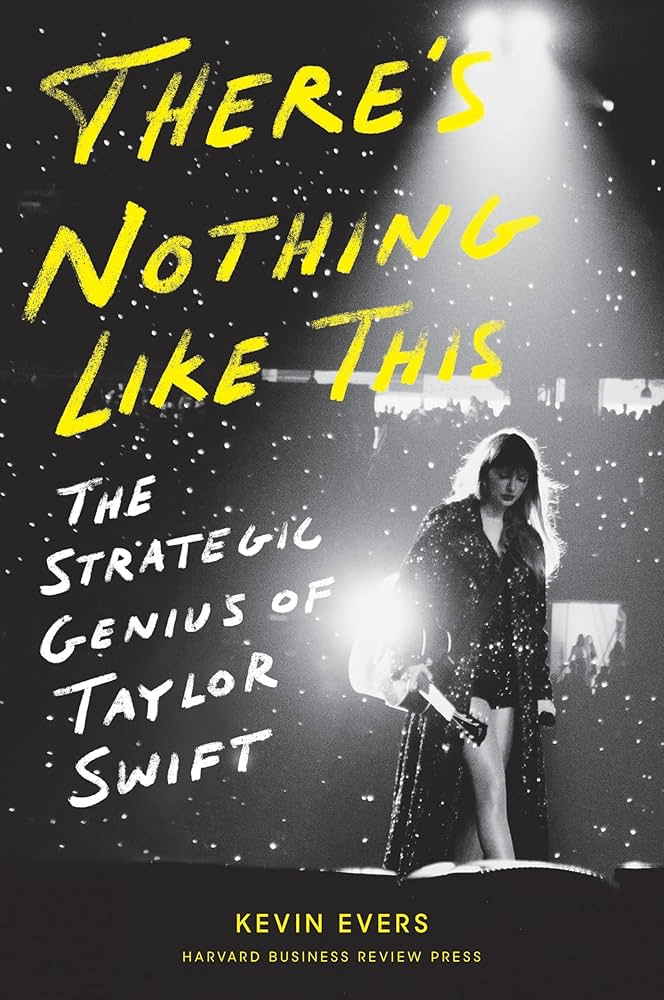
There’s Nothing Like This: The Strategic Genius of Taylor Swift by Kevin Evers
Singer-songwriter. Trailblazer. Mastermind. The Beatles of her generation. From her genre-busting rise in country music as a teenager to the economic juggernaut that is the Eras Tour, Taylor Swift has blazed a path that is uniquely hers. But how exactly has she managed to scale her success — multiple times — while dominating an industry that cycles through artists and stars like fashion trends? How has she managed to make and remake herself time and again while remaining true to her artistic vision? And how has she managed to master the constant disruption in the music business that has made it so hard for others to adapt and endure?
In There’s Nothing Like This, Kevin Evers, a senior editor at Harvard Business Review, answers these questions in riveting detail. With the same thoughtful analysis usually devoted to iconic founders, game-changing innovators, and pioneering brands, Evers chronicles the business and creative decisions that have defined each phase of Swift’s career. Mixing business and art, analysis and narrative, and pulling from research in innovation, creativity, psychology, and strategy, There’s Nothing Like This presents Swift as the modern and multidimensional superstar that she is—a songwriting savant and a strategic genius. Swift’s fans will see their icon from a fresh perspective. Others will gain more than a measure of admiration for her ability to stay at the top of her game. And everyone will come away understanding why, even after two decades, Swift keeps winning.

Eminent Outlaws: The Gay Writers Who Changed America by Christopher Bram
In the years following World War II a group of gay writers established themselves as major cultural figures in American life. Truman Capote, the enfant terrible, whose finely wrought fiction and nonfiction captured the nation’s imagination. Gore Vidal, the wry, withering chronicler of politics, sex, and history. Tennessee Williams, whose powerful plays rocketed him to the top of the American theatre. James Baldwin, the harrowingly perceptive novelist and social critic. Christopher Isherwood, the English novelist who became a thoroughly American novelist. And the exuberant Allen Ginsberg, whose poetry defied censorship and exploded minds. Together, their writing introduced America to gay experience and sensibility, and changed our literary culture.
But the change was only beginning. A new generation of gay writers followed, taking more risks and writing about their sexuality more openly. Edward Albee brought his prickly iconoclasm to the American theatre. Edmund White laid bare his own life in stylized, autobiographical works. Armistead Maupin wove a rich tapestry of the counterculture, queer and straight. Mart Crowley brought gay men’s lives out of the closet and onto the stage. And Tony Kushner took them beyond the stage, to the center of American ideas. With authority and humor, Christopher Bram weaves these men’s ambitions, affairs, feuds, loves, and appetites into a single sweeping narrative, chronicling over 50 years of momentous change-from civil rights to Stonewall to AIDS and beyond.
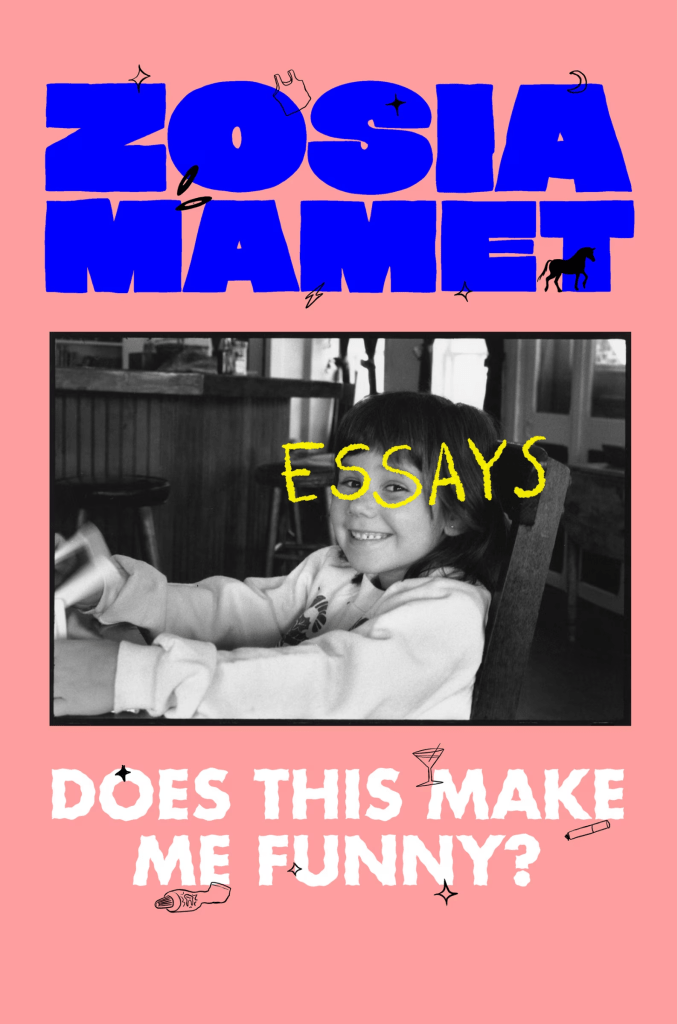
Does This Make Me Funny? by Zosia Mamet
You may know Zosia Mamet from her role as Shoshanna on Girls, or for being one of Hollywood’s original nepo babies (or as she says, “So if I’m a nepo baby I’m like a B minus one at best and maybe not even a full one. I’m like a nepo baby lite, a nepito baby, if you will.”) What you might not know is that as a toddler she visited theaters where her mom was rehearsing and crawled around on the floor, scrunching herself between seats; that she earnestly believed in Santa Claus for way too long; that she spent years navigating body image issues in hopes of finding elusive self-love; and that she was so overwhelmed and overjoyed when finally meeting her idol David Sedaris that she hid in the bathroom and melted into a “glitter puddle.”
The essays in Does This Make Me Funny? introduce us to Zosia Mamet in all her glory—from her early days growing up in literary and dramatic circles, to her years as a young adult pining for acceptance and love, to her first attempts to make it as an actor, to where she and Shosh are now. A gripping, funny, and earnest look at what it means to be a girl in the world and how to define yourself amid the bustle of show business, Does This Make Me Funny? is a captivating debut from a natural-born storyteller.
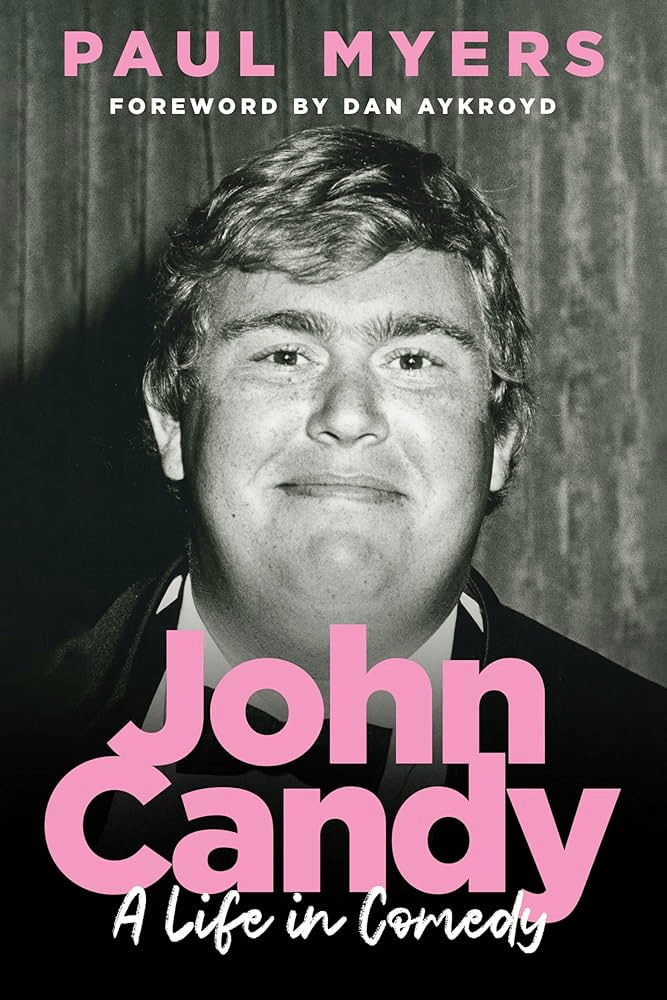
John Candy: A Life in Comedy by Paul Myers
From his humble beginnings in sketch comedy with the Toronto branch of Second City, to his rise to fame in SCTV and Hollywood film classics like Planes, Trains and Automobiles, The Great Outdoors, and Uncle Buck, John Candy captivated audiences with his self-deprecating humor, emotional warmth, and gift for improvisation. Now, for the first time since Candy’s tragic death, bestselling biographer Paul Myers tells the full story of the man behind the laughs. Drawing on extensive research and exclusive interviews with many of Candy’s closest friends and colleagues, including Dan Aykroyd, Chevy Chase, Tom Hanks, Ron Howard, Steve Martin, Catherine O’Hara, Martin Short, and many more, John Candy: A Life in Comedy celebrates the comedian’s unparalleled talent, infectious charm, and generosity of spirit. Through ups and downs, successes and failures, and struggles with anxiety and self-doubt, Candy faced the world with a big smile and a warm demeanor that earned him the love and adoration of fans around the world.
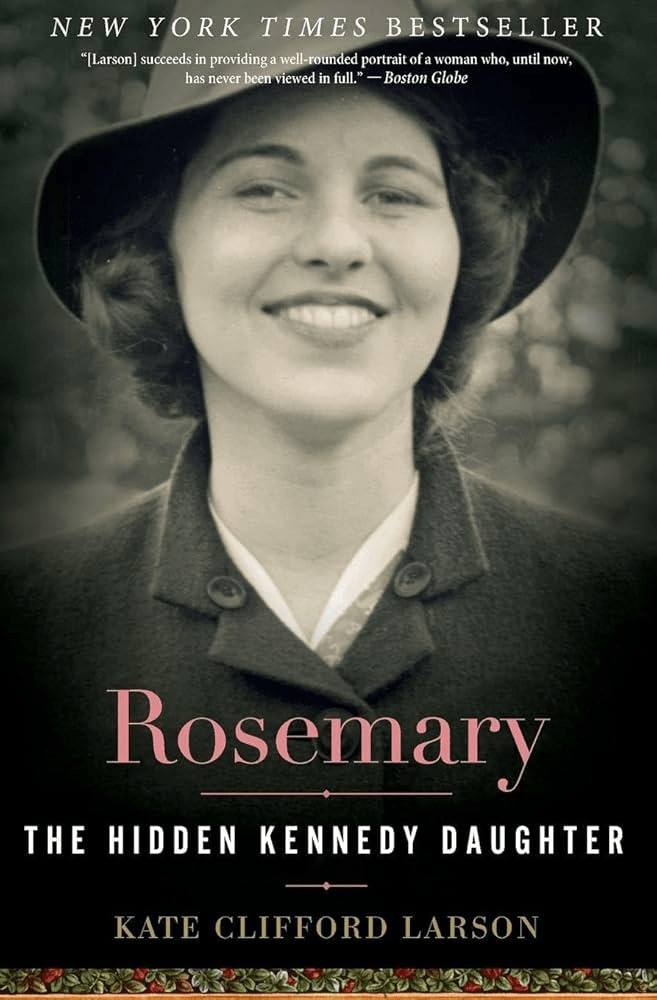
Rosemary: The Hidden Kennedy Daughter by Kate Clifford Larson
They were the most prominent American family of the twentieth century. The daughter they secreted away made all the difference. Joe and Rose Kennedy’s strikingly beautiful daughter Rosemary attended exclusive schools, was presented as a debutante to the Queen of England, and traveled the world with her high-spirited sisters. And yet, Rosemary was intellectually disabled — a secret fiercely guarded by her powerful and glamorous family. Major new sources — Rose Kennedy’s diaries and correspondence, school and doctors’ letters, and exclusive family interviews — bring Rosemary alive as a girl adored but left far behind by her competitive siblings.
Kate Larson reveals both the sensitive care Rose and Joe gave to Rosemary and then — as the family’s standing reached an apex — the often desperate and duplicitous arrangements the Kennedys made to keep her away from home as she became increasingly intractable in her early twenties. Finally, Larson illuminates Joe’s decision to have Rosemary lobotomized at age 23, and the family’s complicity in keeping the secret. Rosemary delivers a profoundly moving coda: JFK visited Rosemary for the first time while campaigning in the Midwest; she had been living isolated in a Wisconsin institution for nearly 20 years. Only then did the siblings understand what had happened to Rosemary and bring her home for loving family visits. It was a reckoning that inspired them to direct attention to the plight of the disabled, transforming the lives of millions.
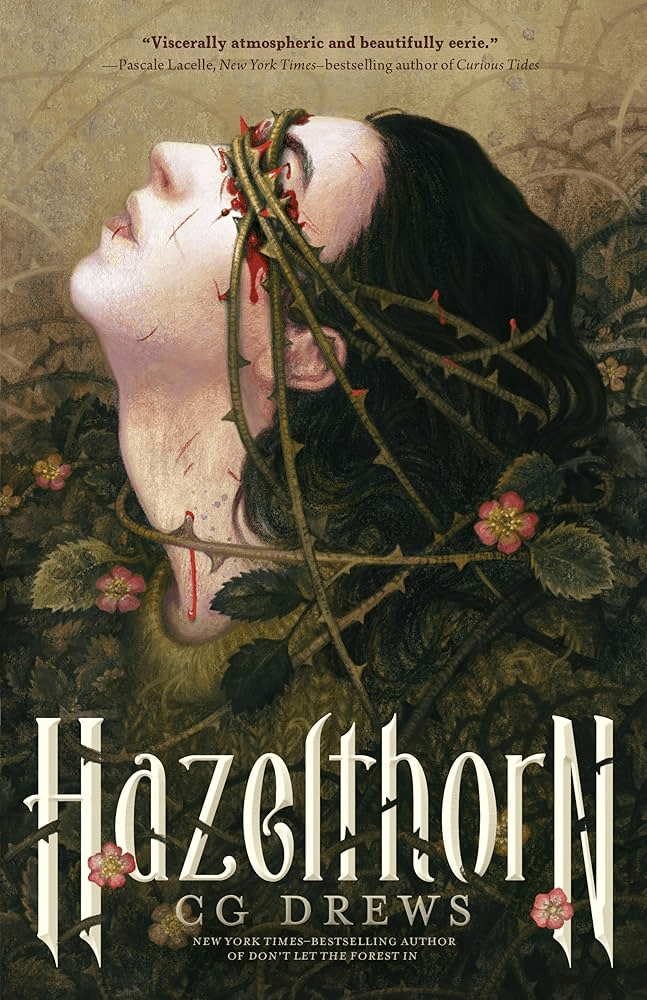
Hazelthorn by C.G. Drews
Evander has lived like a ghost in the forgotten corners of the Hazelthorn estate ever since he was taken in by his reclusive billionaire guardian, Byron Lennox-Hall, when he was a child. For his safety, Evander has been given three ironclad rules to follow: He can never leave the estate. He can never go into the gardens. And most importantly, he can never again be left alone with Byron’s charming, underachieving grandson, Laurie. That last rule has been in place ever since Laurie tried to kill Evander seven years ago, and yet somehow Evander is still obsessed with him.
When Byron suddenly dies, Evander inherits Hazelthorn’s immense gothic mansion and acres of sprawling grounds, along with the entirety of the Lennox-Hall family’s vast wealth. But Evander’s sure his guardian was murdered, and Laurie may be the only one who can help him find the killer before they come for Evander next. Perhaps even more concerning is how the overgrown garden is refusing to stay behind its walls, slipping its vines and spores deeper into the house with each passing day. As the family’s dark secrets unravel alongside the growing horror of their terribly alive, bloodthirsty garden, Evander needs to find out what he’s really inheriting before the garden demands to be fed once more.
What were the best books you read this fall?


 Jeffrey Reads