
20 Questions is a Q&A interview series with authors, musicians, and everyone in between, celebrating experiences both shared and individual in the messy game of being human.
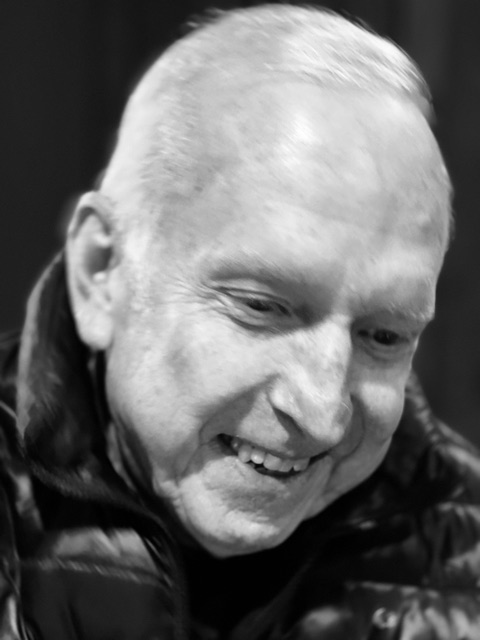
“Queer people have their own experiences of mystery or reality beyond senses. We also have capacities to interpret traditions in ways that are positive for our life.” Steven C. Law is a writer whose work bridges faith and cultural engagement. He holds degrees from Campbell University and Colgate Rochester Crozer Divinity School, where his focus was Christian ethics and social policy. As an ordained pastor, he served rural and urban churches, before studying creative writing with C. Michael Curtis. Chief among his accomplishments are 45 bliss-filled years with Dr. William “Donald” Stroud, with whom he created Découvert Fine Art, an art gallery specializing in European Master drawings. He is the founder and president of the Law Stroud Foundation and lives in Rockport, Massachusetts. I had the chance to chat with Steven about his new book, The Story of Bob: The Life and Times of the Rev. Robert W. Wood, for a new edition of 20 Questions.
Growing up, did you always want to be a writer?
Reading provided a way for me to discover a larger world than what I experienced within my family.
If you could pick one person that’s inspired you the most, who would it be and why?
An editor at The Atlantic Monthly, C. Michael Curtis, who guided conversations about what makes stories work as art.
What compelled you the most to commit the story of Reverend Robert W. Wood, a trailblazer in the LGBTQ rights movement, to paper in the form of your new book The Story of Bob?
How faith or faith ideas allowed him to navigate in a heteronormative culture at a time when little or no support existed to guide him.
Favorite book of all-time?
Impossible to choose. The Bible, maybe. Two short stories tied (truly, I can’t pick one over the other) and I wonder how they might fare a week or a month from now. Both are artful and brim with evidence of imagination in top form stretching the boundaries of language. “The Aleph” by Jorge Luis Borges or “Parker’s Back” by Flannery O’Connor. For me they’re equally as entertaining to read and profound.
If you could have one writer, dead or alive, to compose your obituary, who would it be and why?
Ernest Hemingway because of the achievement of so much conveyed with so few words in Hills Like White Elephants.
The best book you’ve read in the last year?
The Varieties of Religious Experience by William James.
What time of day are you most inspired?
Early morning, just as I am waking up.
What’s the most challenging part of writing for you?
Confidence that my efforts are artful and ambitious enough to matter.
Favorite social media app?
Instagram, because it’s visual. The algorithms have detected my love of music and poetry. My feed is a constant visual, auditory, and literary delight coming from museums, dealers, collectors, symphonies, musicians, writers, and those that share my particular interest in art, music and writing.
The Story of Bob touches on queer people’s fraught history with Christianity. What would you say makes this theme resonate in our current era?
Heteronormative moralistic biblical literalists continue to espouse a judgmental form of religion casting homosexuality as sinful. In some parts of the world, LGBTQ+ people can still be put to death. Queer people have their own experiences of mystery or reality beyond senses. We also have capacities to interpret traditions in ways that are positive for our life. Leaning into liberating spiritual ideas may help us cope in a hostile world, discover equilibrium and joy, and ultimately make better life decisions.
One piece of music that you’ll never be sick of?
Again, hard to choose, but if pressed: Beethoven’s Ninth Symphony.
The last series you binge-watched?
I’ve yet to experience binge-watching.
What’s one piece of advice that you would give to your younger self?
Trust yourself more.
Favorite movie of all-time?
Citizen Kane, La dolce vita, To Kill a Mockingbird, A Room with A View, Babette’s Feast… impossible to choose just one.
What’s your current read?
Anton Chekhov’s Early Short Stories, 1883-1888.
How would you explain the importance and significance of queer visibility in literature and media right now?
Perhaps our culture-at-large is moving beyond cliched ways of thinking about us and is becoming curious to learn how we navigate roles, responsibilities, intimacy, and desire.
Writing at home or in public?
I observe in public. I write at home.
The most adventurous thing you’ve ever done?
Say yes to love.
How would you describe the importance of storytelling in an age of isolation?
Stories written by real people express real points of view and provide answers to the question what does it mean to be human. Human nature is vast and varied. Stories structured around transformative moments allow readers to believe that transformations are possible. Life passes quickly. Aspects of story — conversation or dialogue, gesture, place, causally linked events, character, descriptions of feeling or internal life, joys, vulnerabilities — point to the unique experience of being human.
What can we expect to see next from you?
Writing about love.
Get Steven C. Law’s new book The Story of Bob: The Life and Times of the Rev. Robert W. Wood from your local indie bookstore or library.

 Jeffrey Reads